I had to learn the hard way that you just don’t know what you’ve got till it’s gone. And not just gone for a little while but for decades. Had to learn then, relearn some more, that there are freedoms so common that most people walk past them without ever noticing their radiance.
I was among those oblivious to the freedom to choose a direction and just walk. Oblivious to the freedom to enjoy the sound of raindrops pelting my umbrella. Inattentive to the freedom to stop in an aromatic coffee shop on an early Sunday morning. And blind to the freedom to eat meals at whatever time and in whatever place I chose. So, I’ll say it again. You simply don’t know, can’t know what you’ve got until one day it’s gone. All gone. The umbrellas, the walks, the coffee shops, the fast-food restaurants. I had taken everything for granted until I went to prison and realized how complacent I had once been. Yet the moment I stepped in a prison cell and heard the gate shut behind me, I saw my complacency as clearly as you see the sun when standing atop a mountain.
Throughout the years, I had begun to see my imprisonment as one long training day for post-prison life. There was a lot to learn, like what it means to have an intimate relationship with time. It’s one thing to watch the clock when you have a nine-to-five job. Every day the clock sets you free. It’s quite another to be imprisoned and watch the seasons change with the understanding that if enough seasons go by, you might be released. Prison forges a distinct intimacy with time. In those vast gray fortresses crouched beside frozen rivers and deep woods, the hours accumulate like rust on iron bars. Cell gates would shut with the heaviness and finality of a preacher shutting the Bible. Boots echo across floors polished by years of repetition. The months of the calendar slowly dripped like water from an old faucet that’s never been fixed. At some point during my imprisonment, I stopped imagining freedom as a lived experience and began seeing it as an abstract concept, like perfect happiness.
Like sand through an hourglass, the years accumulated to the point where my prison number became my constant companion. It learned things about me; learned the rhythm of my walk around the yard; learned how winter settled in my bones and made me cough. My number even learned how my eyes avoided certain glances just to survive. The years kept rolling while snowstorms buried the prison yard and summers baked it. Prisoners came and left and some never did. Time seemed to stop moving straight and became circular, as every day mirrored the last. Fortunately, the day came when I walked from the bleakness of prison and into a new start. It was the end, and to make a new beginning I had to make it to the end.
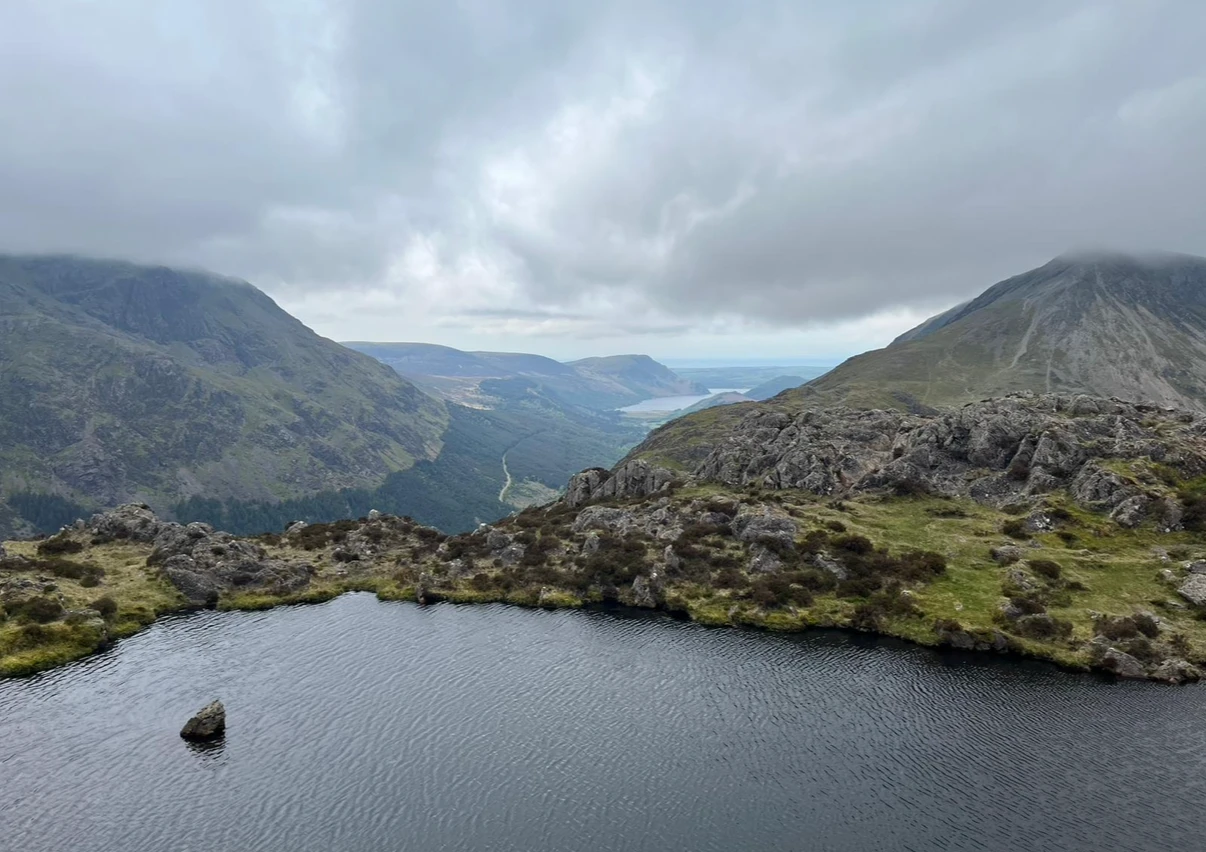
I envisioned doing a great deal upon my release, though climbing a mountain was never among my daydreams. Until I found myself in the Lake District of Northern England standing with a group of friends at the base of one. The mountains in Northern England are called “fells.” They rise skyward not as sharp, jagged peaks but as ancient giants shaped and softened by every conceivable type of weather. It was on a day brooding with dark storm clouds that I began my nine-mile trek over blankets of purple heather, rough bracken, and dark peat. In the hollows between these high, lonely ridges, I saw the deep, still waters of the lakes that catch the shapes of the summits and hold the vastness of the sky.
What I found gratifying about the mountain was its indifference to who I was and where I had been. No explanation about anything was required. I could hike and climb past hard rocks and grazing sheep over a land unrestricted, when not too long ago my whole world was defined by restriction. As I climbed higher, the clouds disappeared and twilight emerged. At the summit, I sat on a rock and watched the first stars emerge one by one in the deepening blue. I felt wonder. Wonder that I could believe in my freedom.