December 2025 Newsletter
The Stories We Build
This November, on his 50th birthday, J. Davis walked into a Maryland prison to open Freedom Libraries. He’d been out of prison fewer days than some of us have spent in the hole. But sometimes, to return is the ultimate act of care.
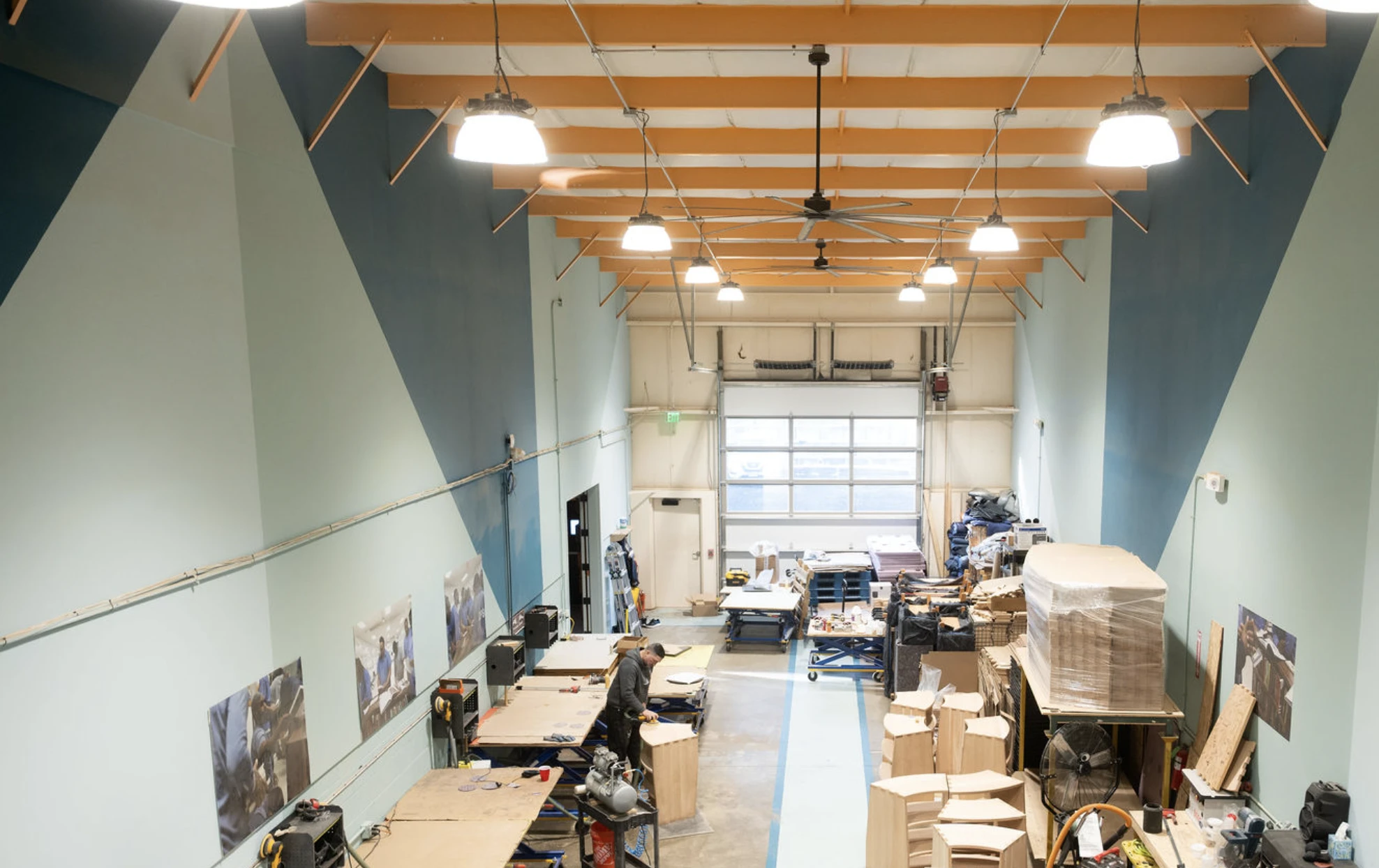
This year we opened nearly 200 Freedom Libraries across 17 prisons in 7 states. Since this journey began, we’ve now opened more than 600 handcrafted bookcases made of maple, walnut, oak, and cherry. That’s 300,000 brand-new paperbacks. And nearly every one of those libraries was built by the hands of Jimmy or Mike. We knew where they would land because Tyler and David made sure Departments of Corrections said yes, and Kevin made sure that when a prison said yes, libraries were waiting.
Autumn had never been inside a prison before; she has only been with us a couple of months. She walked into NJ prisons and immersed herself in the work blending in with the rest of the team, all focused on bringing light into someone else’s life.
On that same NJ trip at the juvenile facility, Craig remembered his past as he thought about shaping new stories we can tell. He rapped with young people struggling to imagine a tomorrow.
Sometimes, all you need to survive is knowing that someone is paying attention to you.
When Allie told me about Maria—a vibrant woman locked in a New Jersey prison, a serious student and reader, with a streak of gray hair that made her stand out like the superhero Storm—it reminded me that people inside touch our lives as much as we touch theirs.
Working with Freedom Reads has been that kind of honor, one told less through metrics than through the lives of the people who carry this work forward. And through the stories we share, the patience we practice, the ways we show up for one another and those Inside.
LeRoy, who talks to our supporters about the beauty of our mission, asks them to join us in the shop and in prisons. Many have agreed. I remember one time when LeRoy was talking to a guy and then he ran after us as we left the cellblock to ask, “What was the book you said I should read again, the one the COs might like?”
There are always stories we don’t tell. There are always more stories than we have room to tell.
Here is one of them.
Thirteen of us, with partners and families, travelled to Birmingham, Alabama. Teryn with her quiet, beautiful baby, held by enough of us to feel, for a moment, like family. We crossed the Pettus Bridge, and I realized James Forman Jr. might be right: fighting mass incarceration is our generation’s civil rights movement. We visited the Legacy Museum and stood inside our history.
There is more to that story. And there are others.
At York, a women’s prison in Connecticut, Lori Gruen returned to a place where she has taught philosophy for more than a decade, this time to open our 500th Freedom Library. She sat with her students in the over capacity crowd as I read from Doggerel.
On occasion, Ben has been spotted building libraries. And if you’ve ever seen a bedraggled workspace transformed into a majestic landscape of wood, light, and grace notes, then you’ve been to one of our gatherings designed by Nicky and orchestrated by Darlene. Krystal returned to the work of ensuring bills were paid so that our work could continue, just weeks after giving birth.
The stories are as plentiful as we are and stretch from New Haven to New Orleans, where Doug and James came from to meet us with more libraries to open in Missouri.
The truth of Freedom Reads is not that any single story carries the whole weight. It is that we keep making room—for attention, for recognition, for the possibility that someone will be seen not as a case or a sentence, but as themselves.
In the end, the truth of Freedom Reads is not only in the libraries we build. It is in the way we move through the world. It is in the care we extend to one another. It is in the stories we tell—and the ones we cannot finish telling, because there are simply too many lives, too much intelligence, too much beauty to contain.
It is, finally, our stories that tell the truth of what we are building. And what we build relies on your support. So this year, keep us in mind when you imagine making the world a better place.
This year, we built something powerful together. Take a moment to see how books, people, and possibility came together in ways that still move us.

By Autumn Gordon-Chow, Craig Gore, and James Davis III
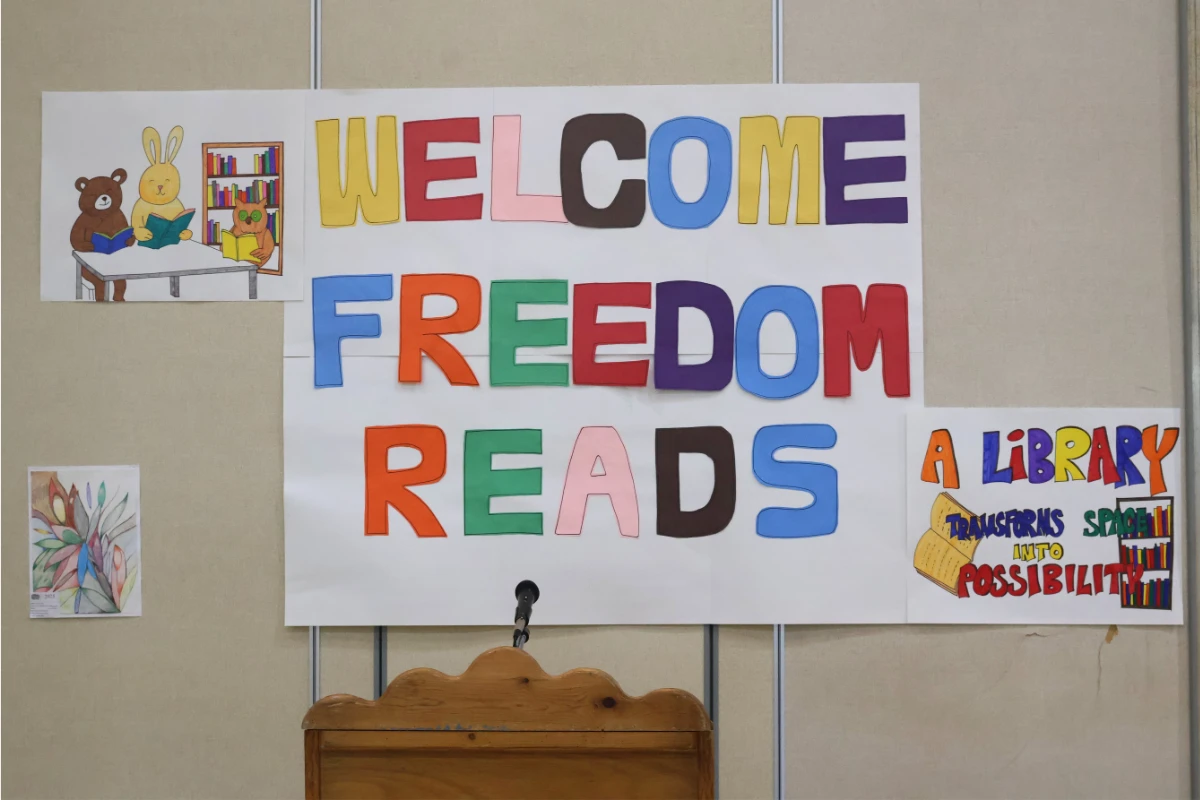
Working at Freedom Reads often compels us to give a part of ourselves that we may not realize we can afford to give. When the newly formed Freedom Reads Communications Team—Craig Gore, James Davis III, and Autumn Gordon-Chow—recently entered New Jersey prisons together for the first time to open Freedom Libraries, they encountered something profound: familiar faces reflected back at them. In the eyes of incarcerated people at Middlesex Youth Detention Center and South Woods State Prison, they saw themselves, their children, their shared humanity. Here, they share their reflections on what they found.
By Lori Gruen, Senior Advisor, Freedom Reads
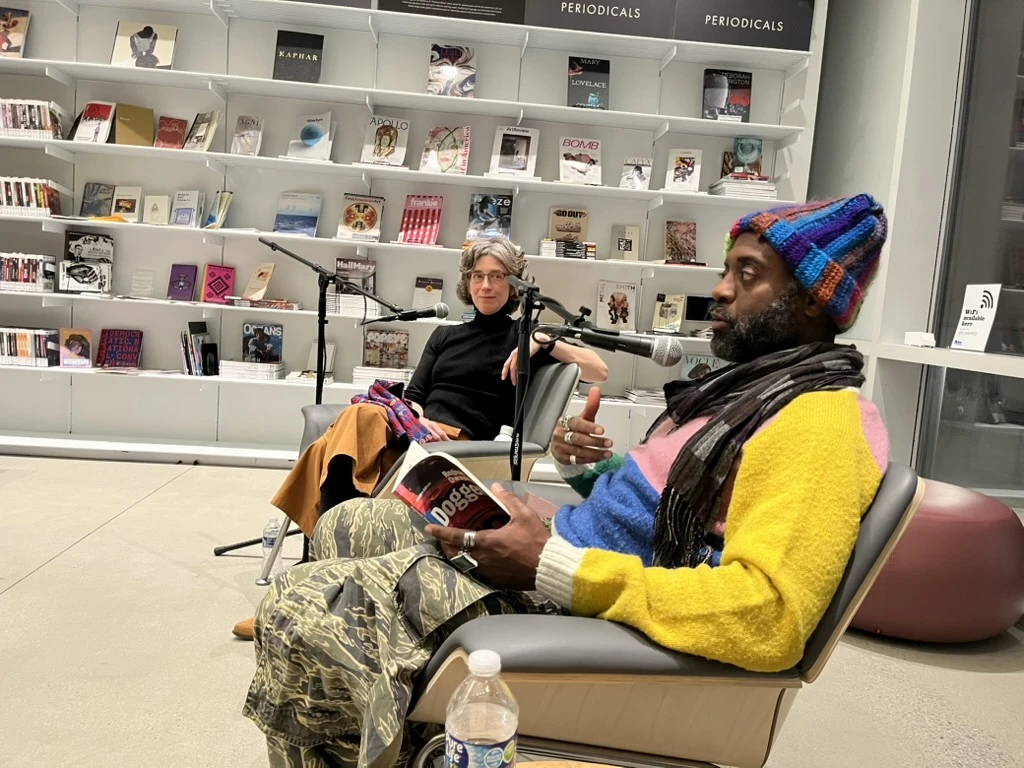
Lori reflects on “Doggerel in the Stacks,” a recent Brooklyn Public Library event with Freedom Reads Founder & CEO Dwayne Betts and dog cognition expert Alexandra Horowitz. In the blog, Lori explores the surprising links between prisons, poetry, and life with dogs — and what they can teach us about how we see the world.
By Dempsey, Resident Creative Writer, Freedom Reads

Dolphins. They were everywhere. Springing and spraying in and out of an undulating tangerine sea set ablaze by a fiery-gold sun. An oceanic dreamscape with splashing dolphins and soaring seabirds doing what they do while the summer sun burns and drips smooth as honey. Such a scene is what a visual artist painted after she visited a prisoner on death row in California and asked him what he thought about from one grey day to the next. He mentioned thinking about a number of things while behind bars. Thinks he should never have committed his crime. Any crime. No time. Though he mostly thought about dolphins and seabirds soaring and splashing in and over the deep blue sea. Perhaps the image represented freedom in its truest form to the prisoner. Freedom in its most elemental state. Freedom in the abstract. Freedom without contract. Freedom that does not detract nor subtract but is pure and simple and intact. Just freedom.
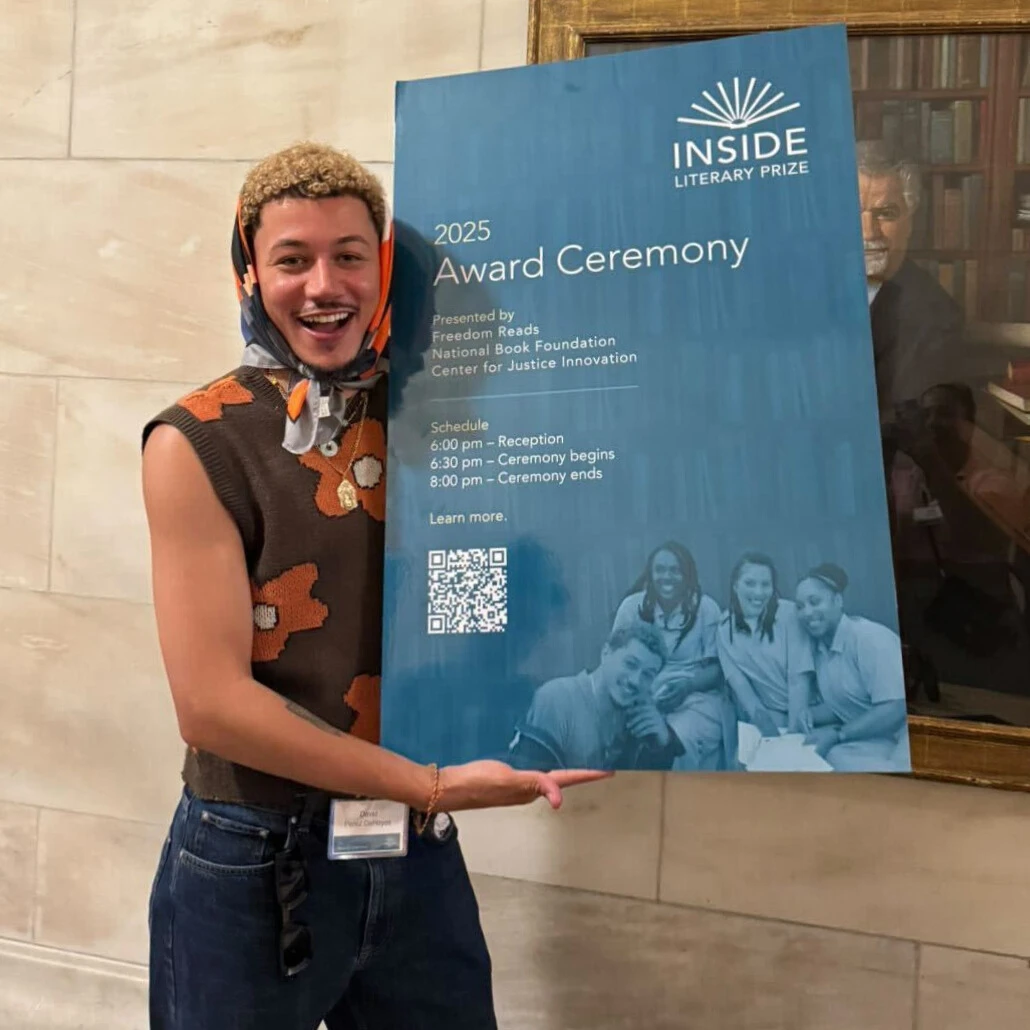
If you’ve ever wondered how Freedom Reads libraries seem to appear across the country with care, precision, and soul, chances are David is somewhere in the middle of it all.
As Library Coordination Manager, David’s days resist routine. One morning might begin in conversation with a department of corrections, shift into planning an Inside event with an author, and close with a Zoom book discussion alongside readers on the Inside. Each day unfolds differently, and that constant motion is part of what makes the work feel special.
By Mobolaji Otuyelu, Creative Assistant, Freedom Reads
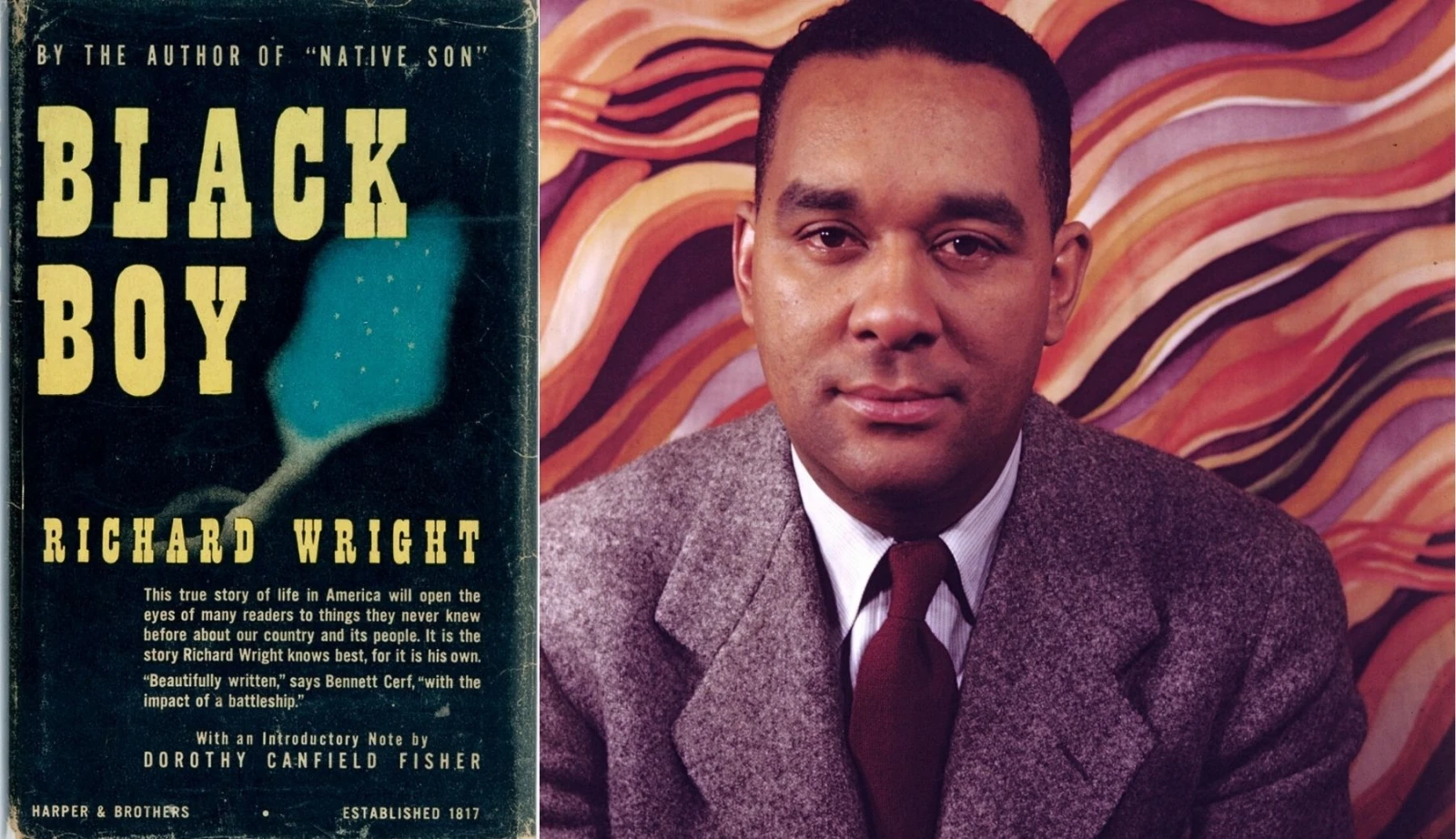
Black Boy is more than a coming-of-age story; it is a chronicle of awakening under pressure, a record of consciousness forged in hunger, fear, and isolation. Wright writes with unflinching honesty about the violence and oppression that shaped his youth. For someone behind bars, these depictions of systemic cruelty and daily survival may feel familiar, they articulate the sharp realities of living in a world that can feel indifferent, hostile, or unjust.
Each newsletter we aim to share at least one letter (or excerpt) from one of Freedom Reads now 37,000-plus Freedom Library patrons. Freedom Reads receives many letters from the Inside. They mean so much to us. And we respond to each and every one of them.
I would like to express my sincere gratitude and appreciation for the level of commitment Freedom Reads has unveiled to inmates since the birth of the organization. Your consistent and meaningful display of unwavering, genuine care and concern for the betterment of inmates educationally (through reading) is undoubtedly a game-changer. Freedom Reads serves as a beacon of light to the men and women being held captive. Thank you so much for all of the hard work, time, and effort that is put into supplying reading material as well as making vital information accessible at no cost.
It is not very often we find such an avid advocator and voice on our side, even from those who were once in our position so I am very grateful for everything Mr. Betts is doing to try to make my- our - lives even a little bit easier. The library he has provided for us is beyond generous, and the bookcases are beautiful.