September 2026 Newsletter
Literacy Connects Us
Dwayne’s TED Talk is live
Reginald Dwayne Betts ate the first mango of his life while in solitary confinement. In his new TED Talk, he shares how that small moment changed what possibility looked like and how books, poetry, and imagination shaped the life and work that followed.
By CEO Reginald Dwayne Betts
Recognitions
A few years ago, I interviewed Girl Trek founders Morgan Dixon and Vanessa Garrison. The two came together to form “a global movement of black women leveraging the historic legacy of walking and the power of self-care as a pathway to transform our lives.” We kicked it for an hour, each of us in a different city, talking as we walked in this collective undisturbed by borders. It was wild, because the last time I’d walked and talked to folks was when I was lapping the prison rec yard with friends. These days I walk thousands of steps each day. And it all started with them.
A couple of years later, I discovered photography through the lens of Daido Moriyama, a Japanese photographer whose practice is walking city streets with a camera and taking hundreds and hundreds of snapshots. Over the last three years, I’ve walked more steps than I had in the previous 42. Walking the streets of New Haven makes me feel less alone, which is categorically different from lonely. I realize I’m almost never lonely, but alone is different. Losing myself in a city with a camera reminds me how we’re always tethered to others.
"Hey, you're the author, aren't you? You wrote Doggerel.”
I looked and didn't recognize her. But she pronounced doggerel better than I did.
“Yes, I saw you at York.”
Damn, I thought. “When you come home?”
Freedom Reads went to the women’s prison in Connecticut months earlier to open our 500th Freedom Library. They’d received one of the first back in 2022, and it was dope to return after we’d visited more than a dozen other states with the 500th. That day, more than a hundred people gathered in the large gym to listen to me read. I had on the beautiful dope funky fresh Freedom Reads hoodie designed by Shavoy Banks with the help of me and my Freedom Reads colleague David Perez Jr. I had 10 rings on my fingers. I wept before them. And laughed, too. A woman came to me during the Q&A. She wondered if she’d get out of prison. I am no augur of hope, but I pointed to one of my guys, who’d done more time in prison than anyone should. He was once told he’d die in prison. He didn’t. And he’d returned with us that day. She looked at him and smiled.
My TED Talk was recently released. It’s the story of a time in solitary confinement when I ate my first mango and how the lesson of that fruit, that I had no name for, has followed me throughout my life, the lesson being that you find what you look for. And in that cell, I was looking for hope and possibility and found it in a mango. In this life, sometimes I’m walking to remember that I am not alone, and meeting that woman in the park, who remembered my name and a poem, reminding me that I’d once sung to a hundred people in a women’s prison, was just one of those moments of finding what we look for. I walk the streets with a camera to remind myself that I’m not alone in this world, and far more often than you’d expect, a stranger confirms I’m right.
Support Freedom Reads and our efforts to make more moments like this possible. Your donations ensure that folks inside looking for a path to freedom can find what they are looking for in the Freedom Library.
by Dempsey, Resident Creative Writer, Freedom Reads
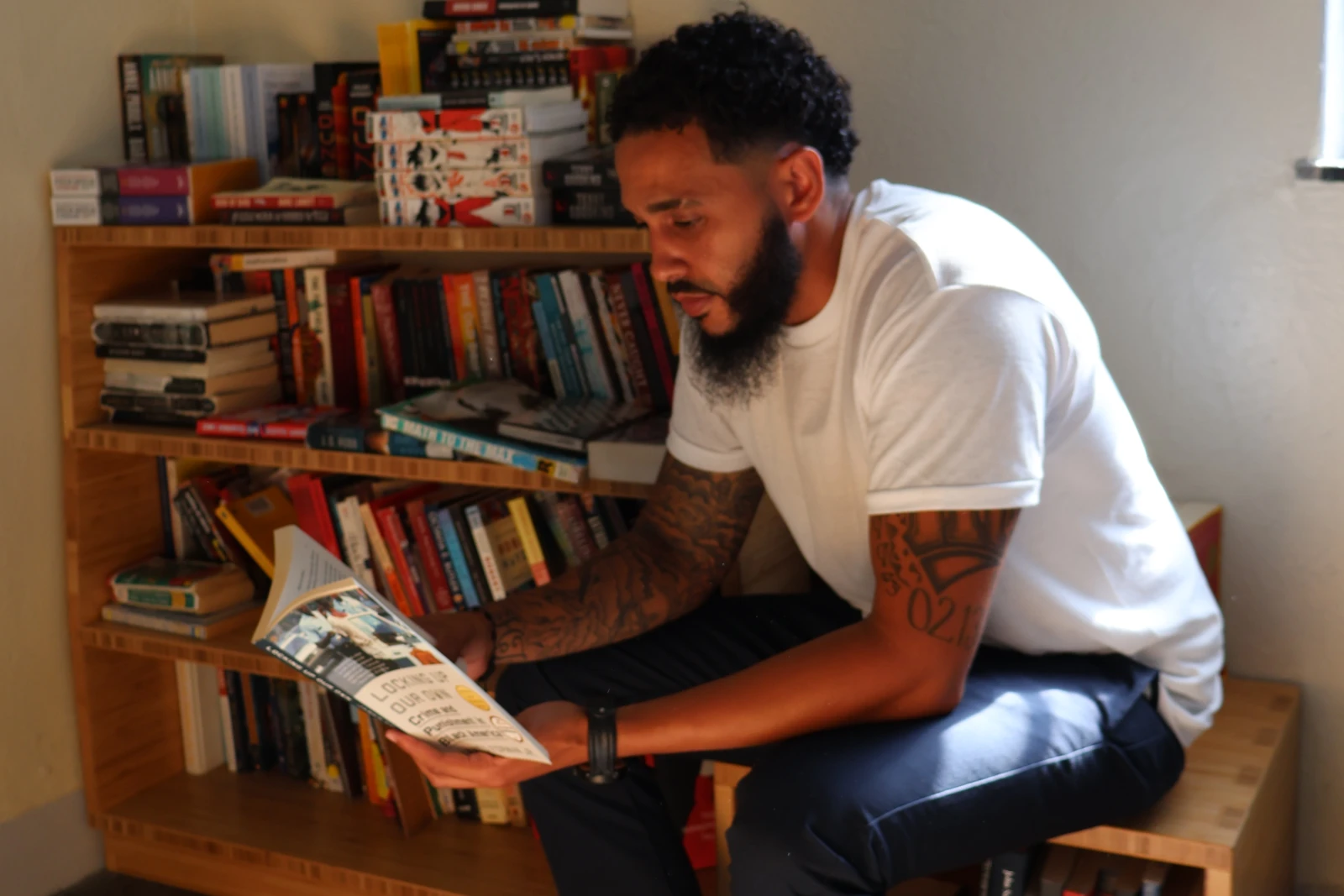
A heavy thunderstorm had settled over New York City, and I was newly incarcerated on Rikers Island, sitting on the edge of my bunk and wondering how to get out of jail as I listened to the steady patter of rain mixed with the intermittent rumble of thunder. I was thinking about everything surrounding my predicament. My mind was in flux. With thoughts racing through my head as fast as the rain falling from the early evening sky, I opened an old, rusty footlocker that had likely been part of the cell for years. I looked on the bottom shelf and saw a paperback book. I took it out and read the title. The Martian Chronicles, by Ray Bradbury. I must have read that book five times before getting my hands on different books. And from that wild and stormy first night on Rikers Island, my journey through imprisonment with the novel began.
I was occasionally asked how I did my time, how I served a lengthy sentence without breaking down, without slowly dissolving into the Earth beneath me. I invariably replied that I was saved by the novel; spared in some measure, the psychological destruction of imprisonment by the novel’s extraordinary ability to transport the mind, to carry it elsewhere, to reroute thought, redirect feeling, and open doors where there were only walls. The novel can entertain certainly, but it can also sustain. Books shore up the abiding loneliness of imprisonment. They lessen the sting of prolonged banishment. They remind us that even when the world has withdrawn from us, another world remains within reach. A large part of life consists of the people who come and go. Some people you don’t mind seeing again; others you ache to have stay. Books, however, offer a different kind of companionship. Their characters and their stories become friends, friends who remain. They wait patiently on the shelf, ready to return to us, sometimes years later, carrying the same words but revealing an entirely different meaning because we have changed.
They become important and towering allies in an often cold and alienating world. In prison, books were supremely important to me. When I was young, I felt that my friends were my world. In prison, my books became my world. They were steadfast, fulfilling, and reliable. They gave me somewhere to go when I could go nowhere, and someone to be with when solitude became almost unbearable. And if I have yet to fully express what the novel has meant to me—and what it can mean to anyone—I offer these salient words from F. Scott Fitzgerald: “That is part of the beauty of all literature. You discover that your longings are universal longings, that you’re not lonely and isolated from anyone. You belong.”
Perhaps that is literature’s deepest gift: the quiet revelation that our inner lives, however private or imprisoned they may seem, are shared. A book does not merely let us escape the world; it returns us to it, reminding us that somewhere, beyond the walls and the loneliness, other minds have felt what we feel. And in that recognition, we belong.
By Craig L. Gore, Communications Associate, Freedom Reads

This marks the second part of a three-part blog series
Released from prison at 22, after five years inside, I did not have a clue how to start making a life for myself and my children. The “father” of two. My oldest son, Craig, arrived exactly a month before my 15th birthday. DeAndre was born 2 months after my 17th birthday. Vanessa, a 17-year-old mother of two, stayed determined not to become a statistic. She never, until this day, asked the state, me, or anyone I know of for anything. No child support papers from her ever slid under any of the cell doors I laid behind.
As a child, something hardwired me to think only having money gave me value to anyone. That wiring made me feel, think, and behave like being without money carried a virus I didn't want to expose anyone to. While obsessed with getting money in my hands, I never thought I needed a skill set or an education to get it. I knew some people had jobs. They usually hated the job but worked it for the money. At that point in my life, I never formed a relationship with an adult male who exemplified the intrinsic benefits of hard work and a formal education. The hardworking adults I knew were women.
My parole officer marked me as a success story from our first encounter. During our first meeting, he told me he knew I would succeed. I assumed that he felt that since I went to prison so young and stayed for 5-plus years, I should come out "scared straight." Maybe he looked at my file, saw no father or mother, and felt pity for me. He knew I did not get many visits throughout the years I spent incarcerated; he mentioned it sometimes to remind me. Back then, if on parole, a job was mandatory. At the time, I didn't have any employable skill sets. My parole officer directed me to the resource center inside a Connecticut Department of Labor building. He sent me there to find work. At the time, my work history consisted of an under-the-table job washing dishes when I was 12/13 at what I thought was the fanciest restaurant in New Haven, because the mayor and a lot of “fancy” people ate there. I always wondered if they knew about the minors in the back of the house washing their dishes and mopping the floors.
I didn't know who to speak to or what to expect at the resource center. I walked in and let them know why I'd come. They took me to a special room set aside for people like me, people who were down on their luck in life, or on parole, or trying to get off welfare. Someone escorted me to this room full of computers and left. The whole thing felt very impersonal. The staff seemed perpetually busy and in a rush, though that didn't describe the whole building. Looking around, I saw a bigger open space where other people sat at desks with staff, talking one-on-one. Maybe that formed the second part of the process. I didn't know. I did not make it that far. A lady came into the room, stood in front of me, set up the computer, told me to enter my information, and told me to click here when I finished. And I did exactly that. Then I sat around for probably about twenty minutes. Nobody came.
I sat there feeling how I felt in those hospital visits during my mother’s slow death. I’d sit beside my mother’s hospital bed and watch the nurses and doctors ignore her. She suffered and died from full-blown AIDS in 1990. During that time, there was a lot of ignorance and fear around that disease. To them, my mother had a plague. So they avoided her and often ignored her cries for help with pain or water, food, or just using the bathroom. I sat there in front of that screen feeling like I had a plague and was being ignored by the staff at the resource center. I got up and left. That summed up my attempt to apply for a job and look for employment using a computer.
At that point in history, cell phones were just starting to permeate our lives, and we were still a long way from smartphones. So in order to actually get on a computer and look for a job, I needed to actually go to the machine in a building I would have never entered otherwise, or a building I associated with a system working against me. For me, entering that space took real effort. The slightest impatient or calloused attitude from the staff usually triggered a strong negative emotional reaction in me. The funny thing about that space that stuck with me is that nobody showed me how to do anything. They just came in, set up the computer, put me where I needed to be on the screen, and that ended it. We're talking about 1995. Back then, computers were still fairly new; I knew my way around a keyboard. Still, it felt alien to me, and the vibe of the space made that feeling worse. It made me feel uncomfortable. It made me feel unwanted. I didn't want anything to do with that room, and I definitely didn't want anything to do with that computer.
Technology was foreign to me, not the disconnect. I spent years believing that my value came from having money or material possessions, not from learning or letting someone help me. So when I found myself in front of that computer, I did not see an opportunity. I saw another reminder that certain places, systems, and conversations existed that I didn't know how to enter. I did what the woman told me to do because parole sent me there. At the time, the computer felt intimidating, and I could easily walk away. I rushed to get up and away from that screen. Today I understand I struggled with more than technology. I moved through life with a bad connection: disconnected from people, opportunities, and a version of myself that believed I deserved more.
By Reginald Dwayne Betts
This past April, I had a chance to deliver a Ted Talk. My remarks, coming shortly after Ann Patchett delivered her stunning talk about being a proselyte for literature, I walked to the stage more nervous than I’d been in years. I can’t wait for the world to hear the story I told, because for what it’s worth, my singular intention with my Ted Talk was to remember that we do more than suffer in this world, and that even in the face of our suffering, there is a possibility, a certainty, that we will find what we look for. The tragedy of it all is mostly we don’t remember that when we court anger and frustration and resentment and hate, those things become, inevitably, what we find at every turn. I was nervous in Vancouver, so most days, I’d steal away into the city and lose myself amongst the people and my small Ricoh GR IV Monochrome.
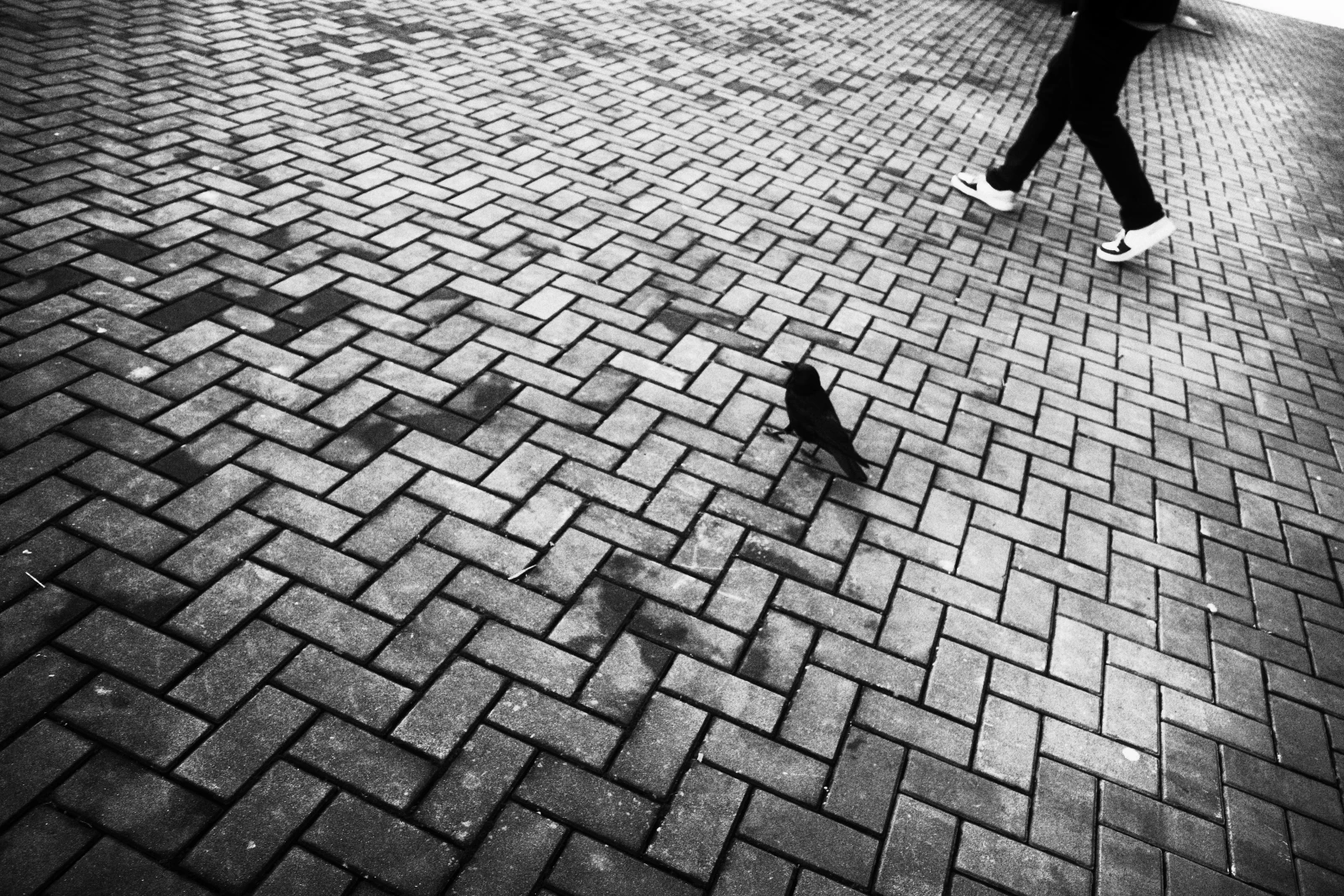
There is always a story to tell. And one story is about the wisdom of following blackbirds, or whatever it means to know you and a blackbird are for a second on the same journey.
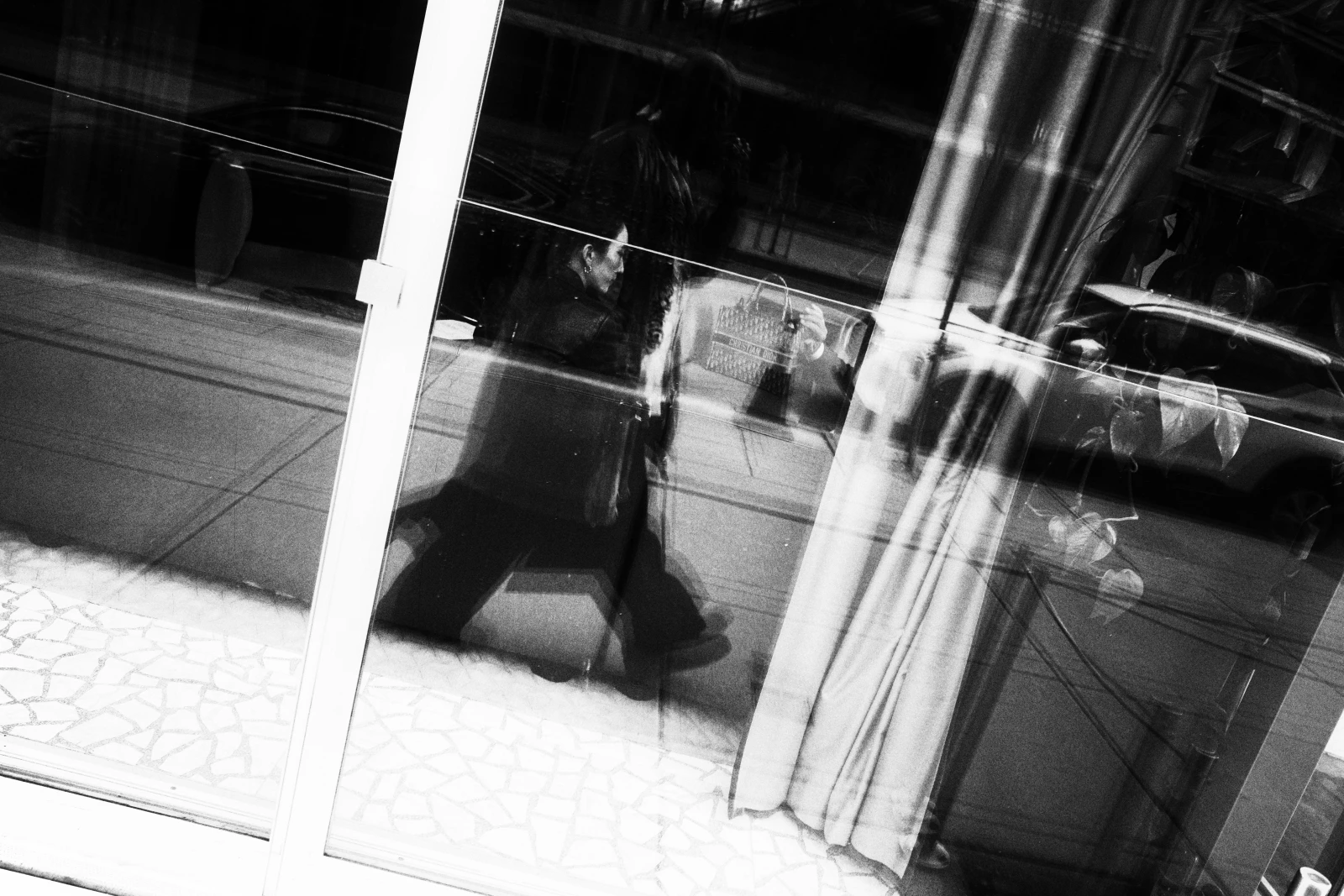
I discovered the hakama on accident. Discovered Maharishi on accident. But the brand, founded in 1996, the same year I went to prison, is just about this remarkable interplay of cultures, of design, and principally of what it means to transform materials once meant to denote war into something else. But I wasn’t really thinking of that then, just snapping a photo unconsciously of myself walking past a mirror.
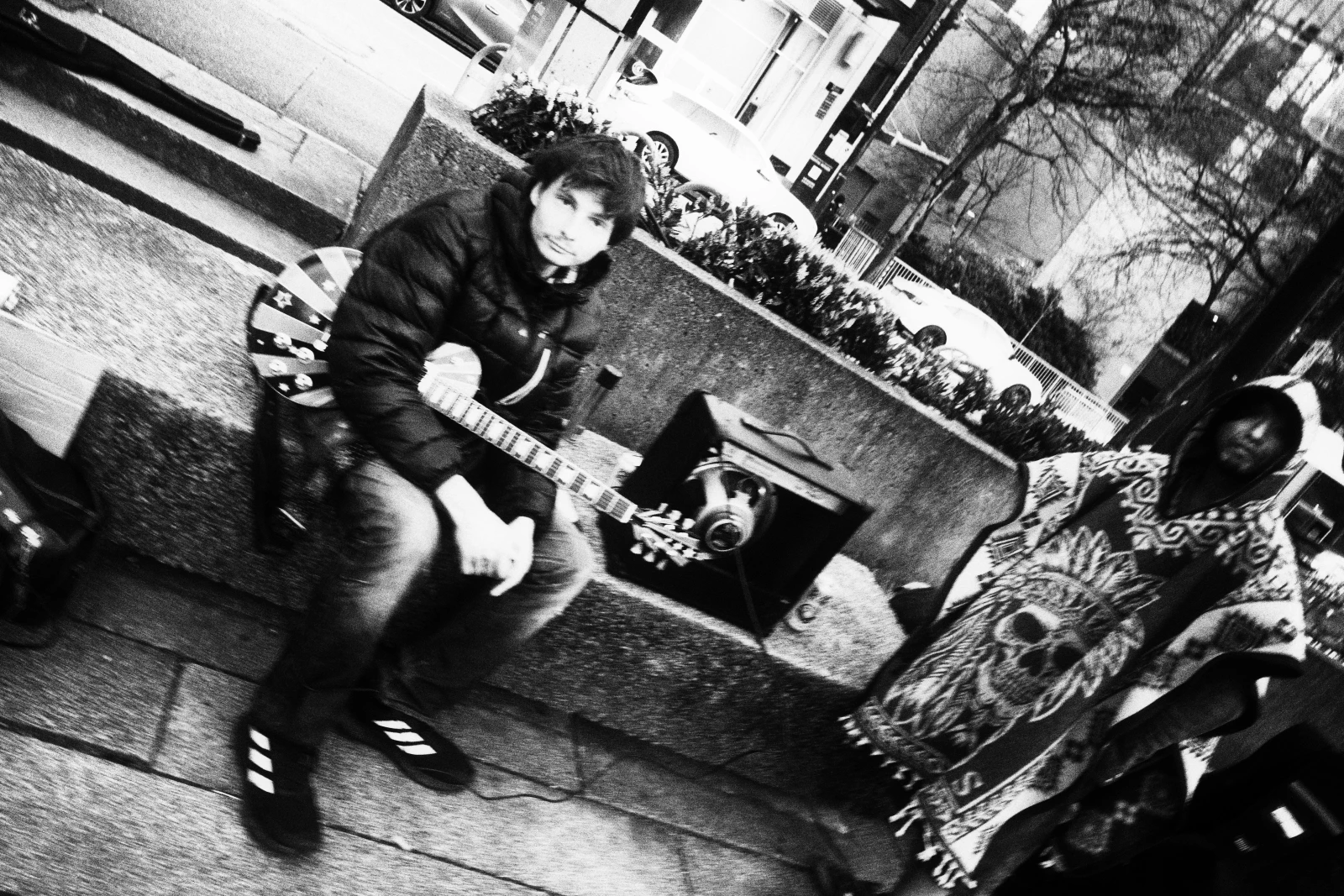
One time, me and Can, we had the most amazing experience eating Ramen at this spot called Tanuki in Amsterdam. I wanted to ask this brother for a song, or volunteer a poem and jump into the session. I regret that I didn’t.
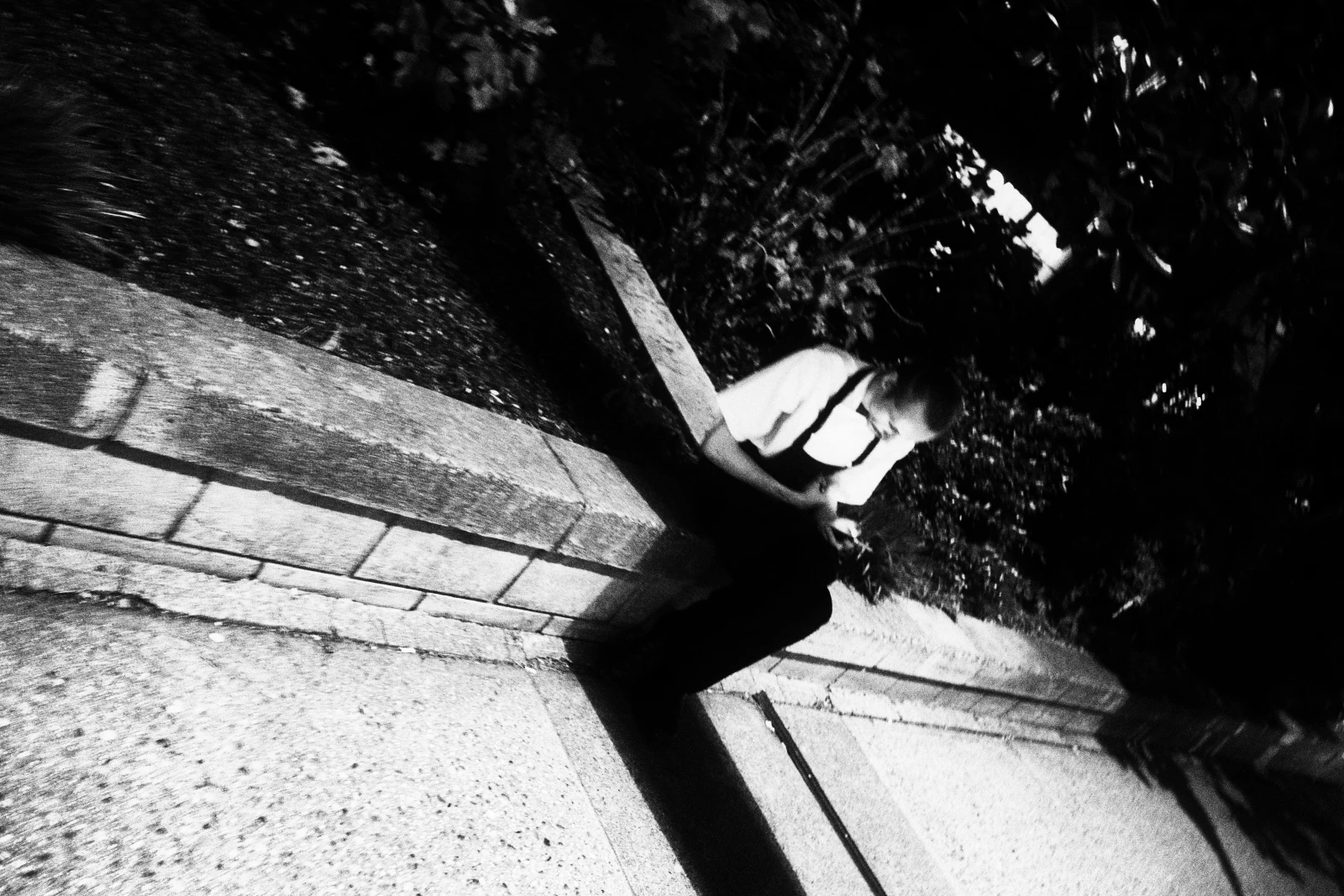
Maybe there is something of the self-portrait in every photo. Imagine being able to sit still with a book long enough to disappear into the landscape of the city that lets you savor it.
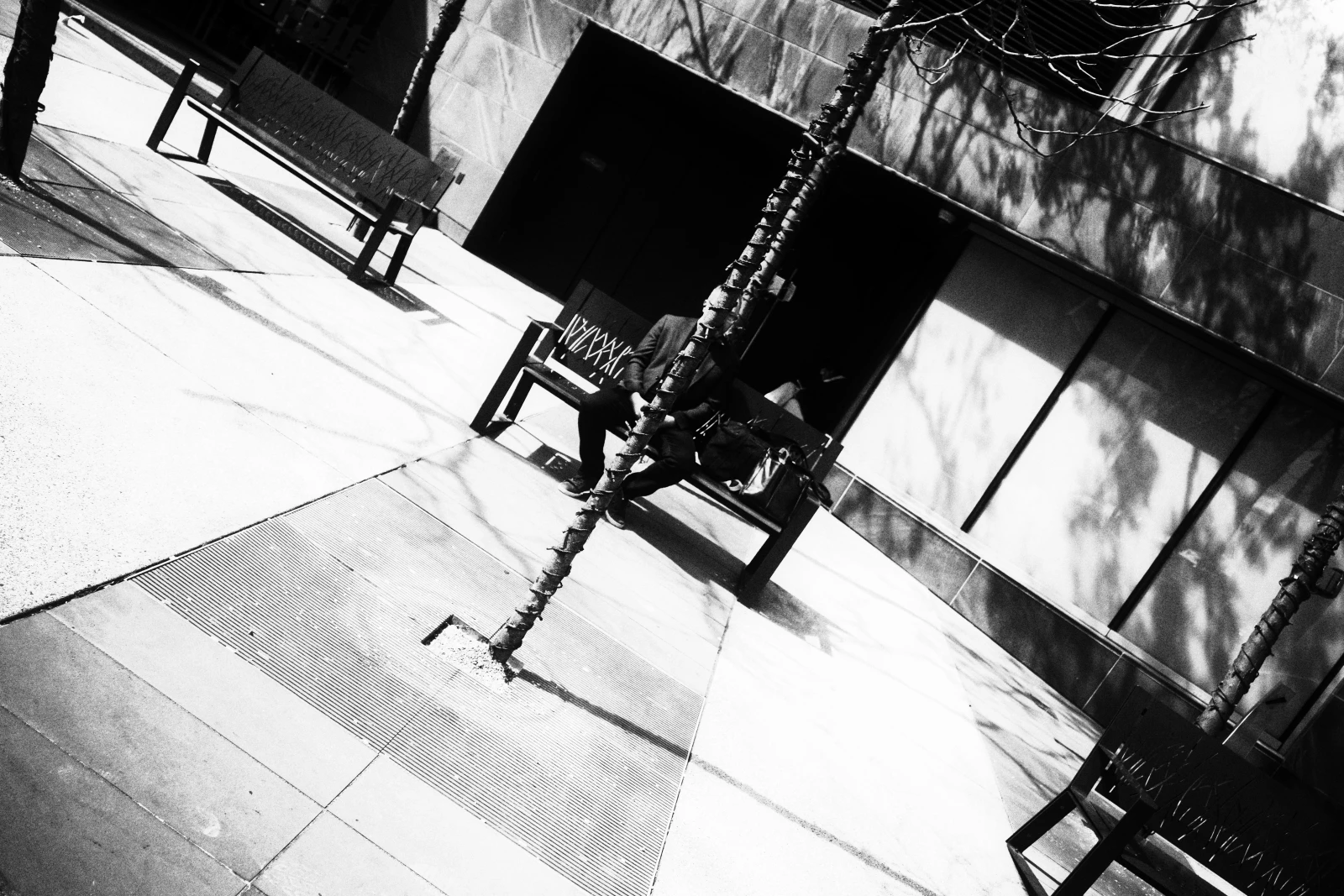
And know that imagining is so different from feeling invisible, or at least feeling like there is something making everyone see you aslant and you can’t name it. Maybe that’s how I felt preparing to walk to that stage.
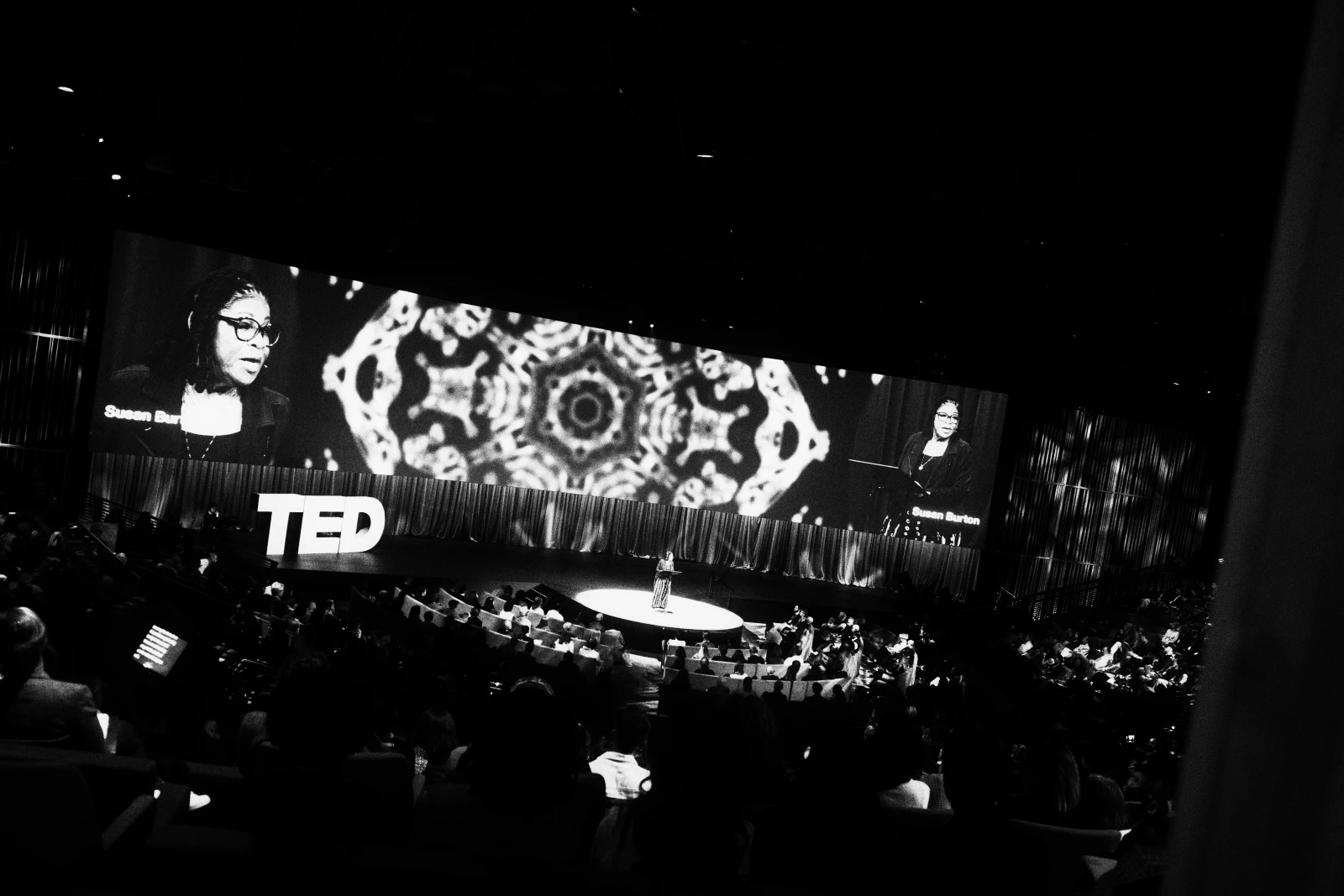
Then my good friend, one of the most amazing women I know, Ms. Susan Burton walked onto the stage and rocked it. I remember one time lamenting to her that I wanted to get copies of Bastards of the Reagan Era or Felon into a prison. She said, develop the plan, put in the work, and trust the funding to do exponentially more than what you just said to me will come. And when I was reeling from depression and stress, she offered me some time in her Los Angeles home. And why wouldn’t she, her work has been to make homes for others, as she did for me when she rocked that stage. Cause a few days later, when I walked out there, it felt familiar.
Now, my Ted Talk is out. You can watch it here:
Words from people who have encountered Freedom Libraries and the work of Freedom Reads
“Dear Mr. Betts, I was at your book opening at Otisville Correctional Facility, and I truly feel that this is a Divine appointment, as opposed to coincidence, because I actually believe that coincidence is God's way of remaining anonymous. You said the thing that resonated in your spirit was the question the man posed to you: are you a poet or do you write poetry? Which by the way wasn't just a question but prophecy spoken aloud now it's being fulfilled in and upon your life may the Lord continue to strictly bless you and your entire family.”
Frederick, Otisville Correctional Facility, New York
“Thank you so much. As someone who entered incarceration with minimal reading comprehension 12 years ago, this means a lot. The gesture and the opportunity is priceless. These books bring so much wealth.”
Oscar, Valley State Prison, California