Thank You
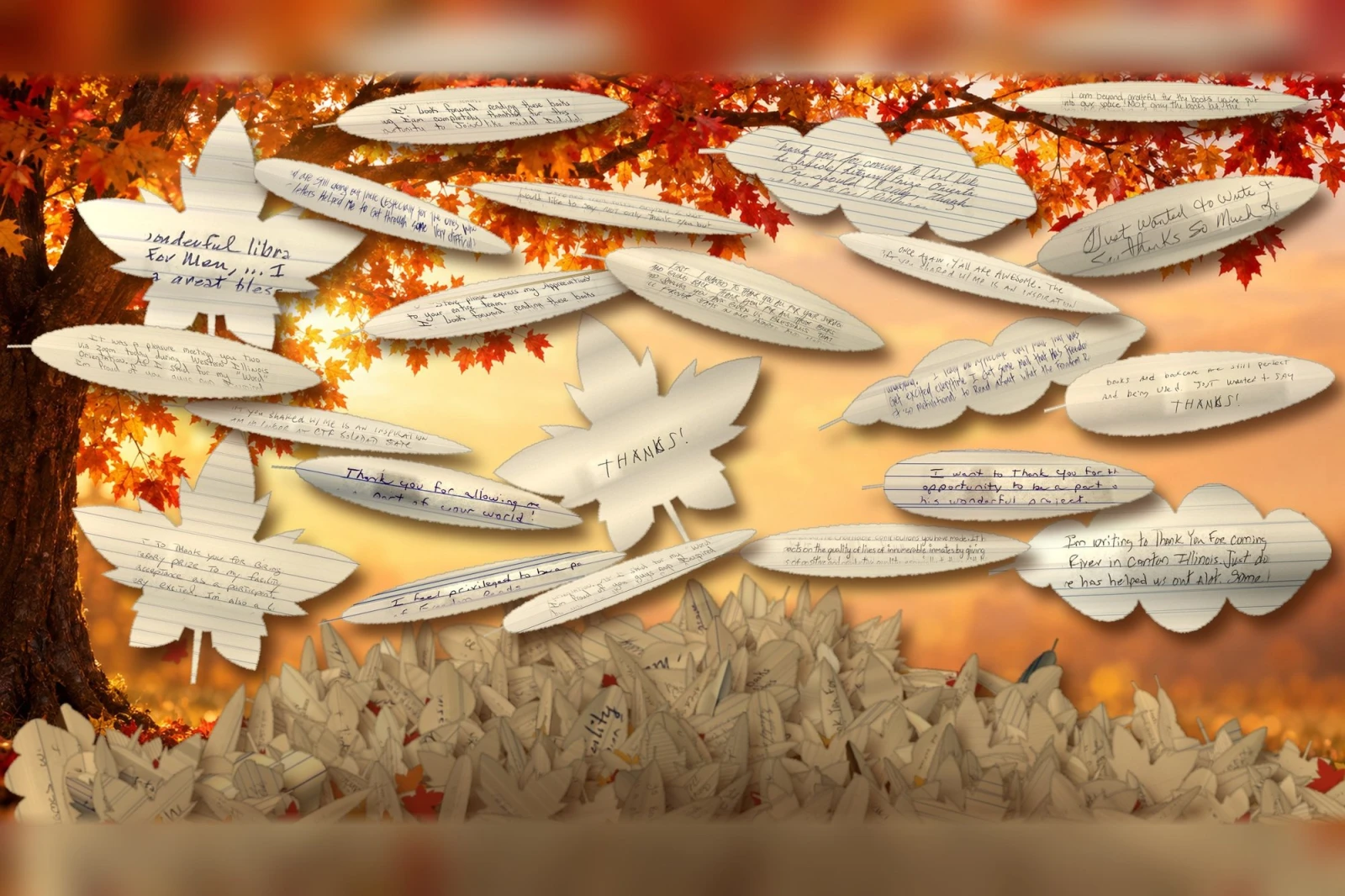
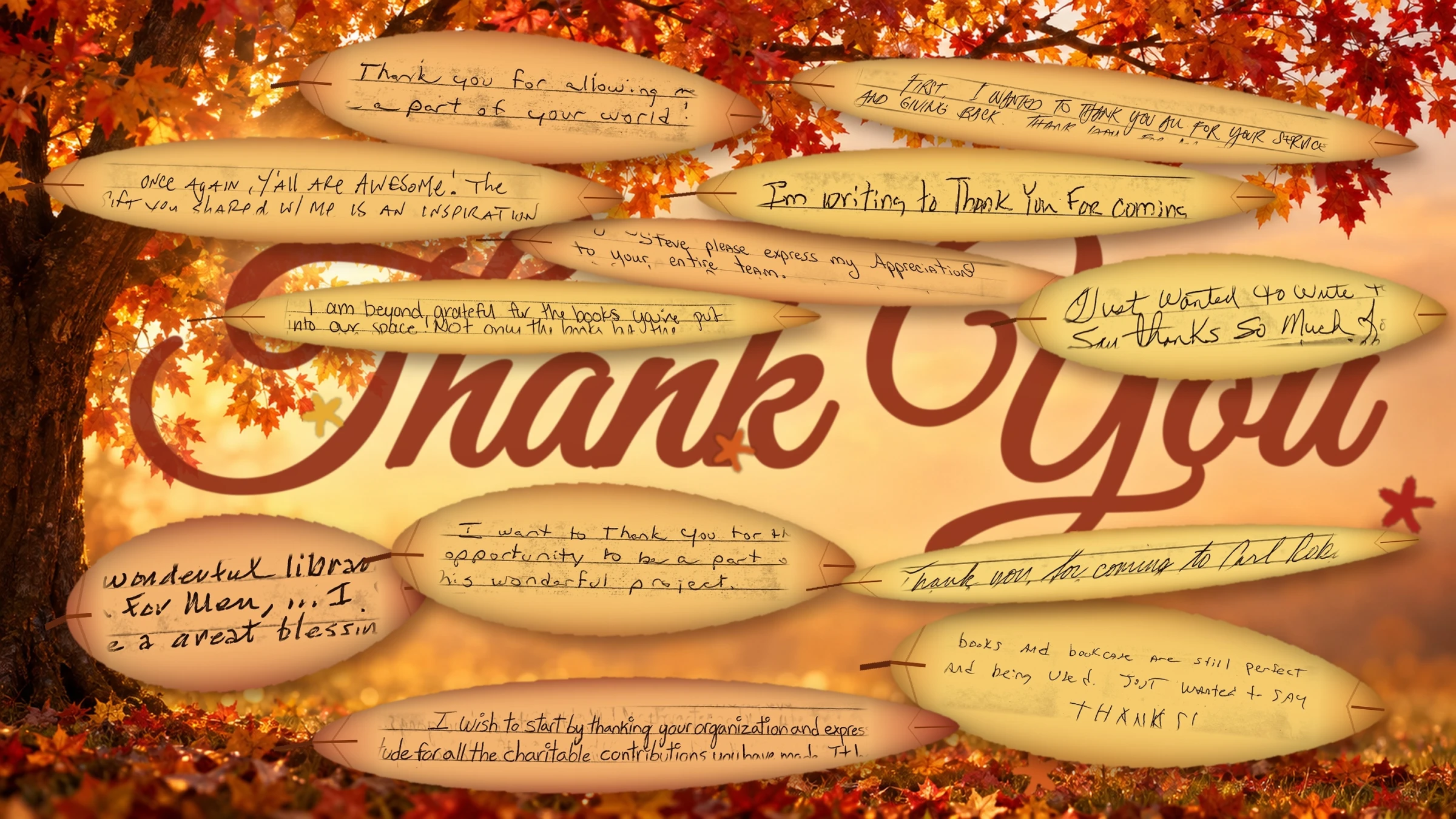
Join us this month as team members share what they’re thankful for in life and in our work. To everyone who makes our work possible: Thank you!
Join us this month as team members share what they’re thankful for in life and in our work. To everyone who makes our work possible: Thank you!
Dear Readers,
I forget, far too easily, to be grateful. But I am. I came out of prison with more ambition, drive, nerve, and Black men who loved me than I ever had before I graced a prison cell. Remember from day 1 strangers ready to go to war with and for me, whether it was violence or passing around books as causeways and bridges and maps to places we imagined and people we imagined becoming. My therapist once told me, but Dwayne, you've always been well loved. And I'm grateful.
At any age, a prison cell is harrowing. At sixteen, it feels like walking into an imminent disaster. Since March 4, 2005, when I was released after serving 8 and a half years for an armed carjacking, I've been talking about prison. Since March 4, 2005, I've worn my felonies as if they tell the world something about me. Or as if I could prove the story they tell ain't half the truth.
This week, at the 4EYE Theater near the Waterfront in Southwest, D.C., March Forth is playing. Today is the last screening, Nov. 19th. My oldest son Micah turns 19 today, on this anniversary of the Gettysburg Address. I think about that now, and all the things that I'm grateful for that I don't name. Once, Can, short for Candace, took me on a surprise road trip to Gettysburg. We'd been dating a minute and have known each other since we were 12. When I got back that night, I told Micah about the trip, and he said, "four score and seven years ago," and I remembered when he turned eight, and we learned the speech together. A decade had nearly passed since his eighth birthday, but he remembered, and telling me seemed his way of saying I'm glad you're in love, Dad.
Watching the film with my sons, I felt like Micah and Miles were seeing me unvarnished. Then I remember the times Miles walked in on me weeping and sat with me. How Micah let me know that sometimes I've been giving him and his brother too much, and then wrote poems for me reminding me that I will soar. The film is only a partial reflection of the man my boys know, and I'm most grateful they didn't learn my name from it.
Truth be told, Robe Imbriano and Val Hong were there for me too. More than the film's directors, they became friends. People who saw me in moments of despair, of depression. People who saw me and said this is a part of the story, because, even if you don't know it today, you're going to be alright. And there are more to name in this story. Lynn Novick, the producer and director of Crime & Punishment (now playing on PBS), not only connected me to a psychiatrist when I struggled to find someone competent, but she doubled-down on believing my voice was needed in her film. I'm certain that once she mailed me a set of lights for when I bike in the morning after learning that I biked sans helmet and lights for a few weeks.
In prison, it was the same as the story I needed to tell my sons. Let them know about Bilal. When I was sent to solitary confinement for the third or fourth time, it was Bilal who wrote my mom to tell her that I was just a kid in a landscape that was meant to break men. But that I was a good kid, and that he had my back. I didn't read the letter until 10 years after my release and it left me weeping, remembering that for all the violence and absurdity of prison, men like Bilal made sure I was good.
Snoopy, Base, Twan, Malik, Star, Luke, Trigger, Tran, Pootsie, Keese, Divine, and a dozen other names I rarely say all ensured that thirty years after my incarceration, there would be a story to tell that's more than woe.
A few days ago, walking to the theater for the first screening, I thought: I am not lonely. And when I say I wasn't protected, maybe I mean that I struggled for years in prison, adjusting to being perpetually uneasy. But weren't we all? And maybe it means that I, like many of us, find it easier to recount the ways we suffered than all the things that have brought me joy.
I'm not sure what people think about the film. I'm never sure, and maybe it doesn't matter. There is a moment at the end of the film. I've just finished performing my solo show. The first person to ask a question is a brown skin brother with a beard of more salt than pepper. And he leans into the microphone and says, I just wanted to tell you that I love you. He recounts his memories of becoming a resident in a federal prison, of knowing how to sling a kite. He reminds me that there is always someone who matters that is watching or listening.
Our mission at Freedom Reads began with wanting to build 1,000 Freedom Libraries. Then we learned that wouldn't put a dent in the need. Now we know that to transform the lives of people in prison, we need a Freedom Library in every cellblock in America. As you plan your end of the year donations, consider supporting Freedom Reads. By the end of next year, we'll have opened 1,000 Freedom Libraries in cellblocks all across this country. Our goal of a Freedom Library in every cellblock in America will happen, and your support will get us there. Whether you donate or spread the word, thank you.
Take care,
Dwayne
Founder & CEO
By James Davis III, Communications Associate
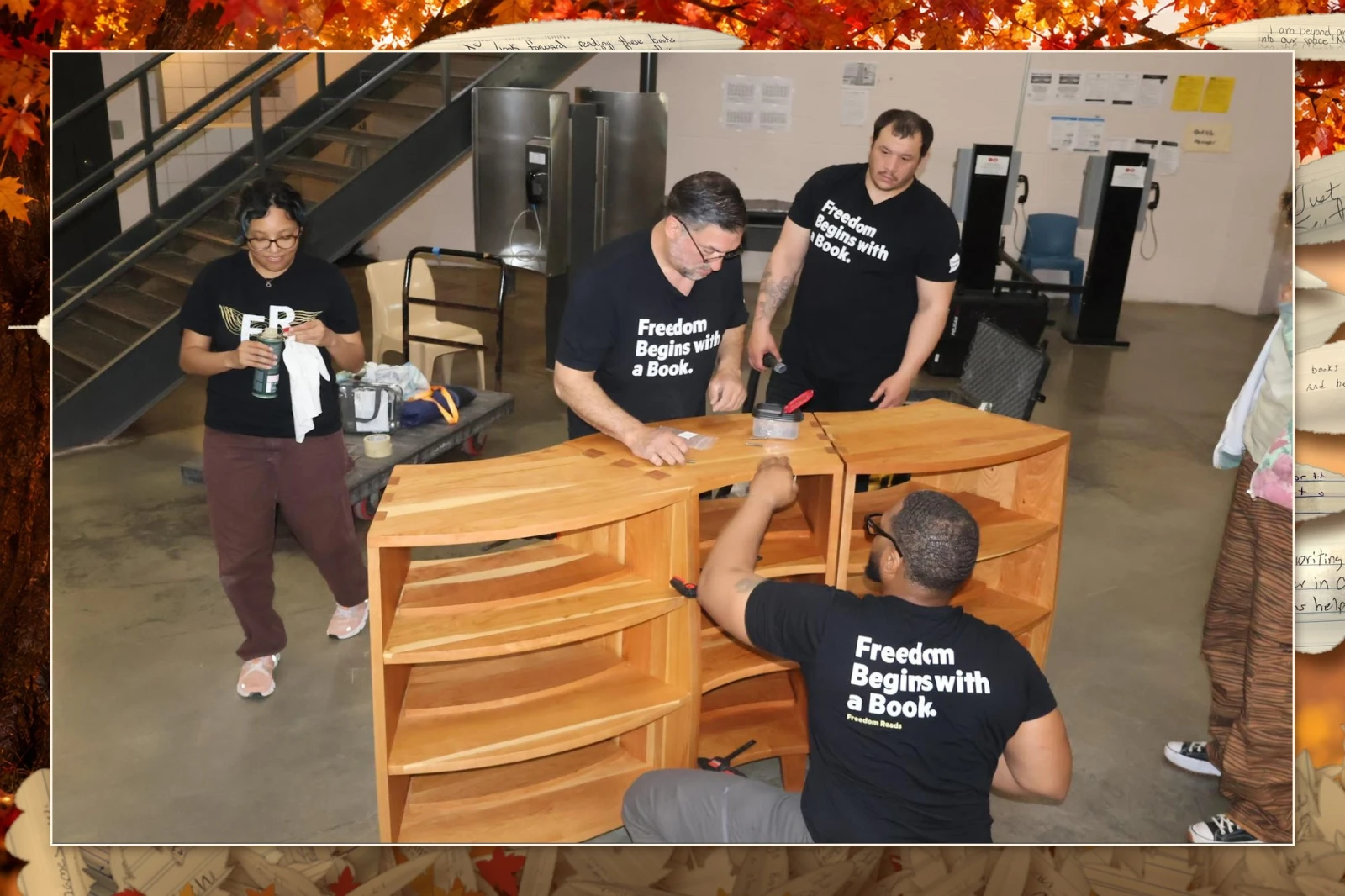
Missouri, Eastern Reception, Diagnostic and Correctional Center (ERDCC)
Freedom Reads is all about access to joy, and we bring exactly that to prison cell blocks through the Freedom Library. Literature and beauty are brought together by hand. In this case, the hands of a team dedicated to the work.
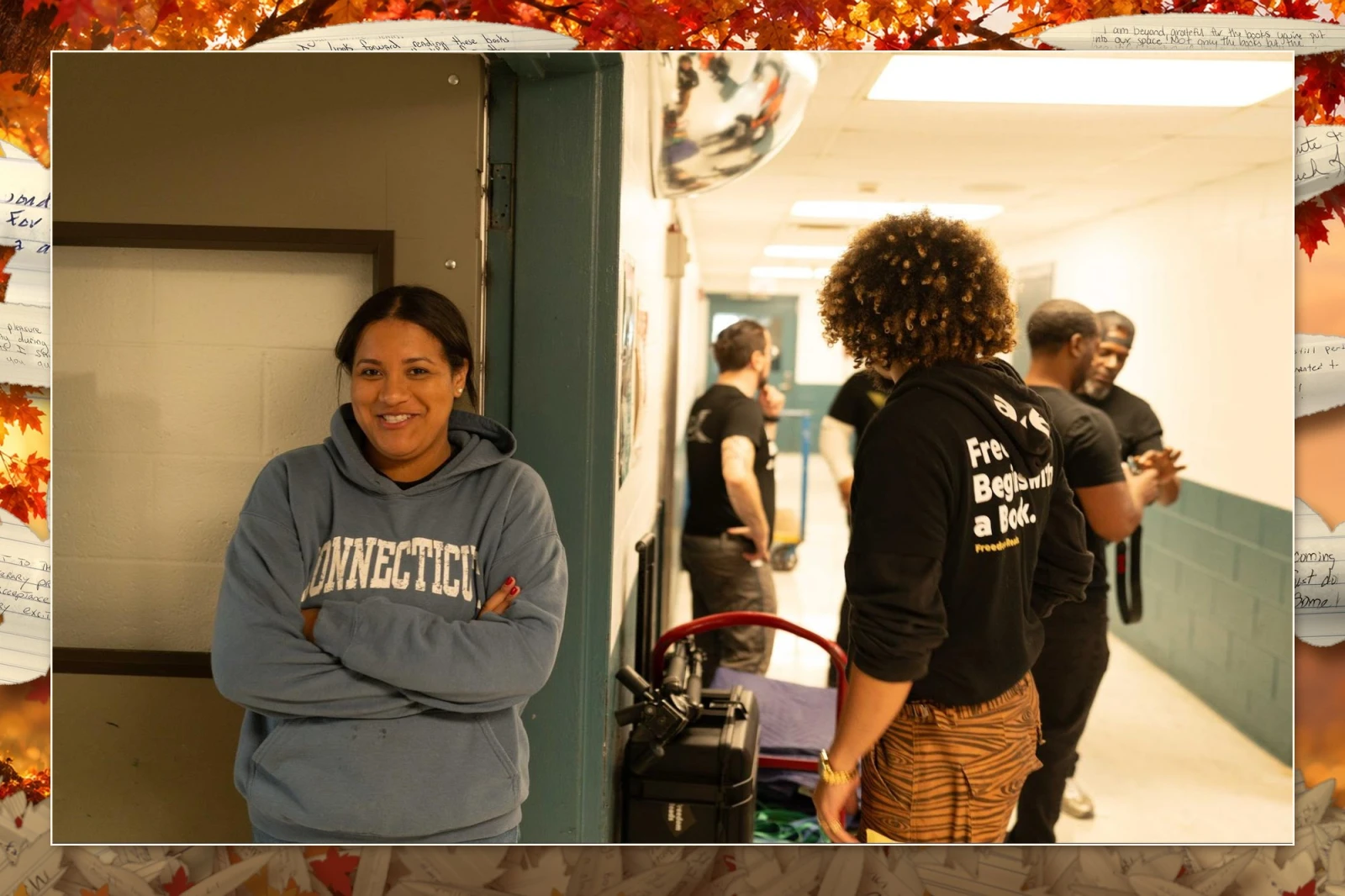
New Jersey, Bayside State Prison
Working inside prisons means working according to the correctional schedules that govern movement and lives. There are many opportunities to wait, and it could be frustrating if the team were not so passionate about the mission. You see that smile. It’s the work that makes it possible to smile in moments like these.
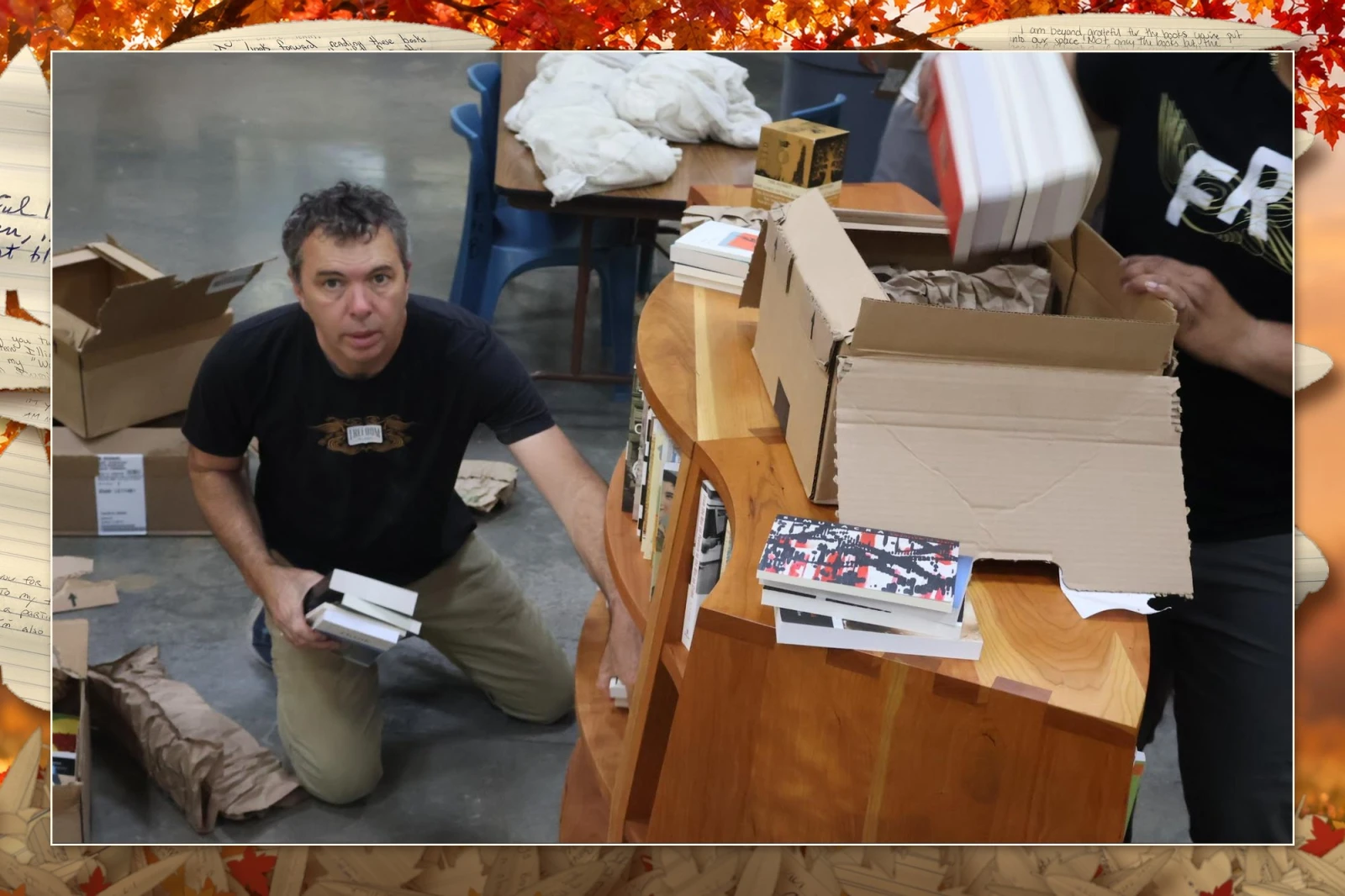
Missouri, Fulton Reception and Diagnostic Center (FRDC)
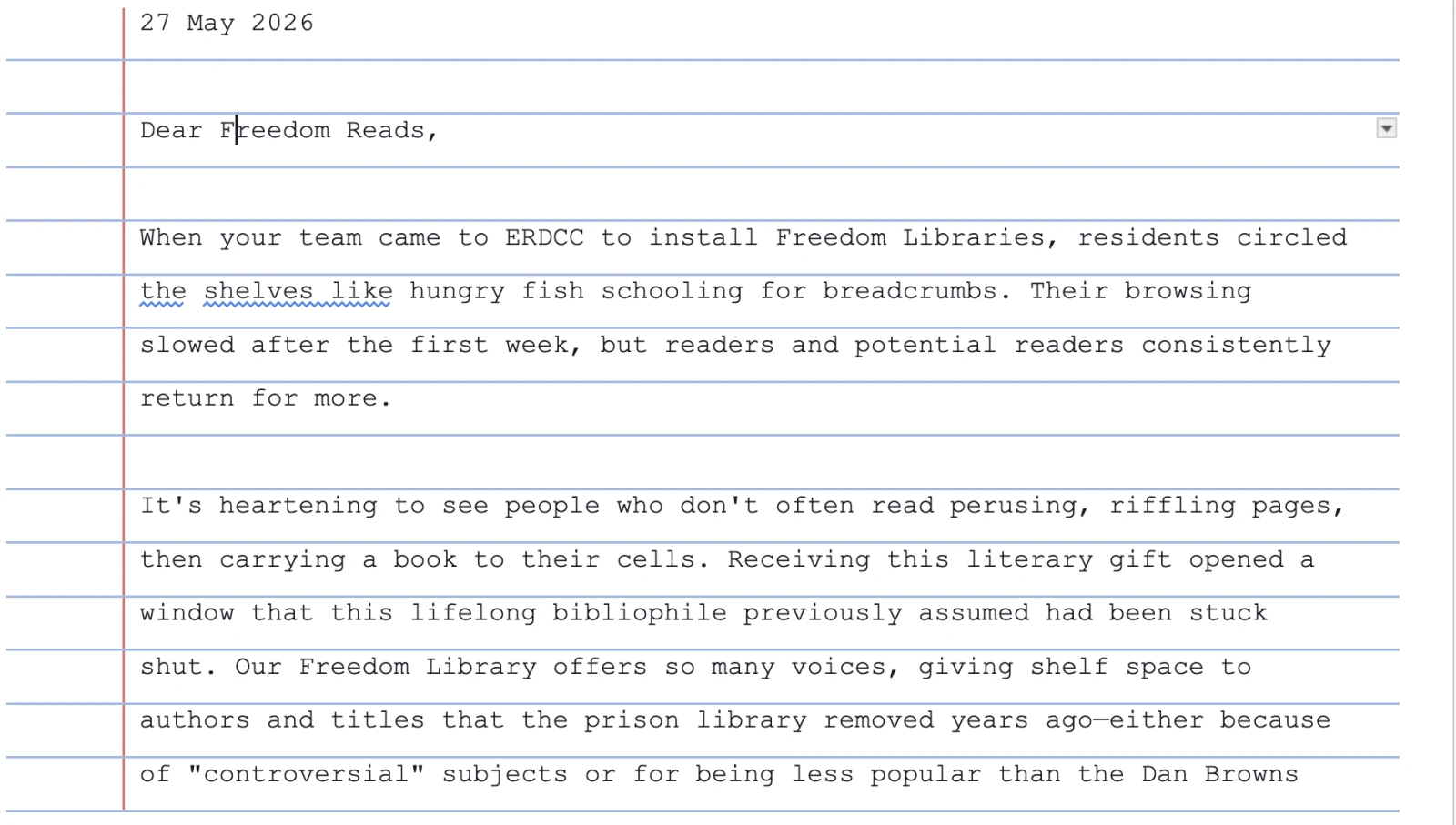
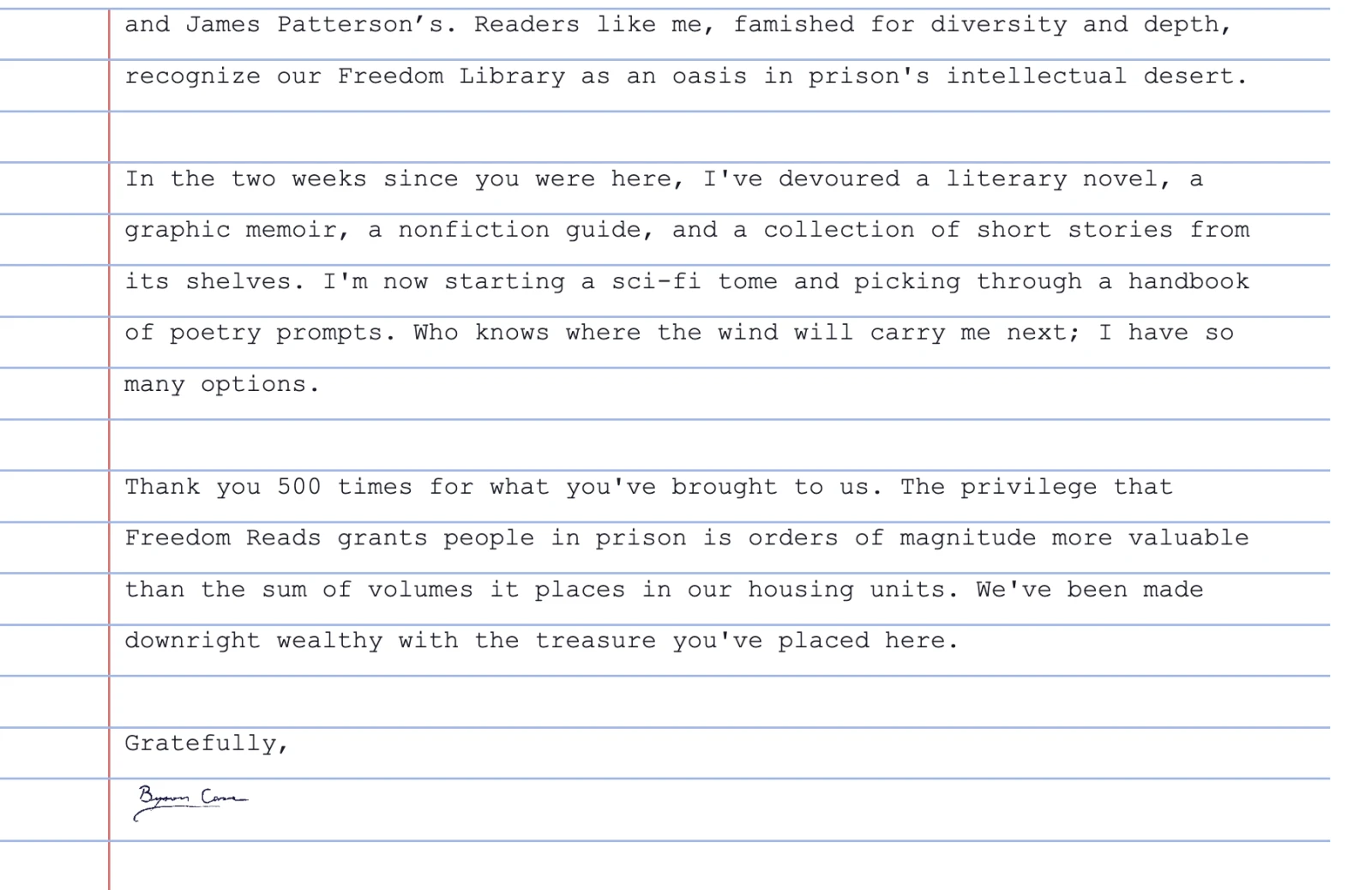
It is not all smiles, though. 500 books per library, and we opened many libraries that day in a Missouri State Prison. Doug came from the Louisiana office to make this day happen. It was a day to remember for sure, as another facility experienced all that Freedom Reads brings to a facility.
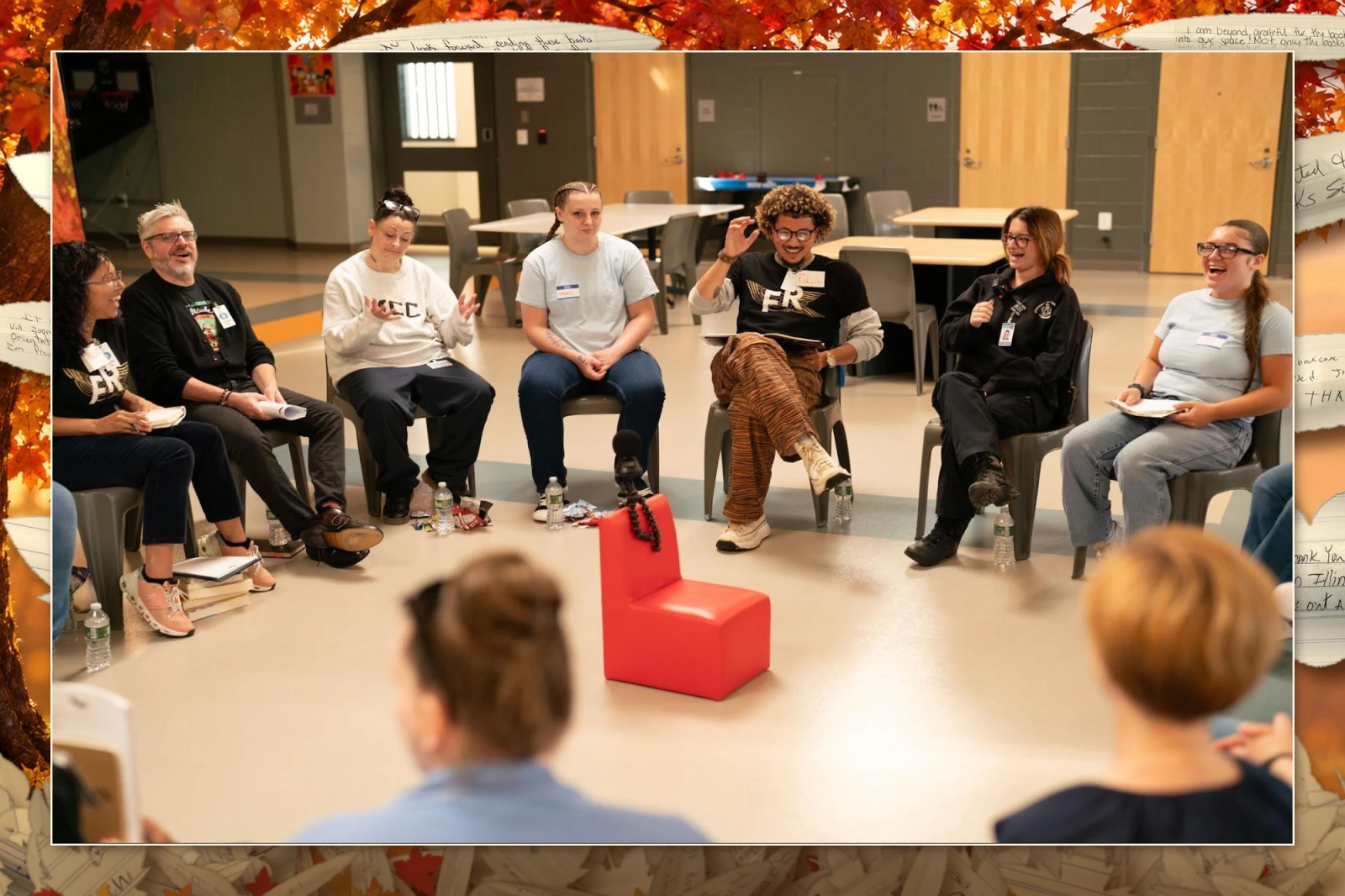
Maine, Maine Correctional Center (MCC)
We did more than open libraries too. We had incredible conversations about books with some incredible judges around the country. There were smiles and laughs, disagreements and reconciliations. Through it all the literature was the focus, and all went beautifully, as it should.
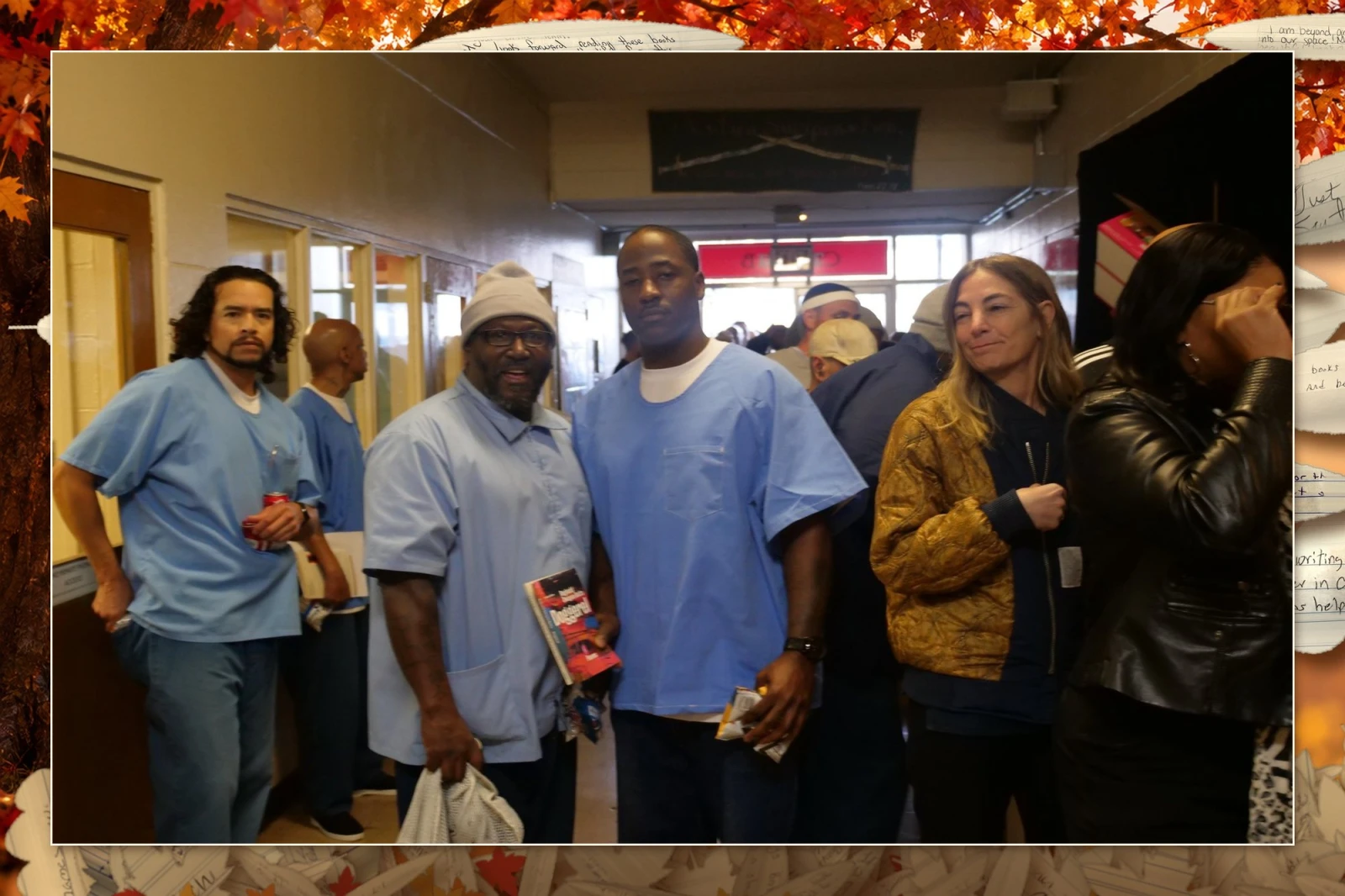
California, San Quentin
March 4th was a day to remember as the entire Freedom Reads team went to San Quentin to see Dwayne perform Felon: An American Washi Tale, for an audience that included incarcerated and invited guests. The night was amazing in so many ways, and it was all made possible by your support.
Thank you.
By Dempsey Louis, Resident Creative Writer
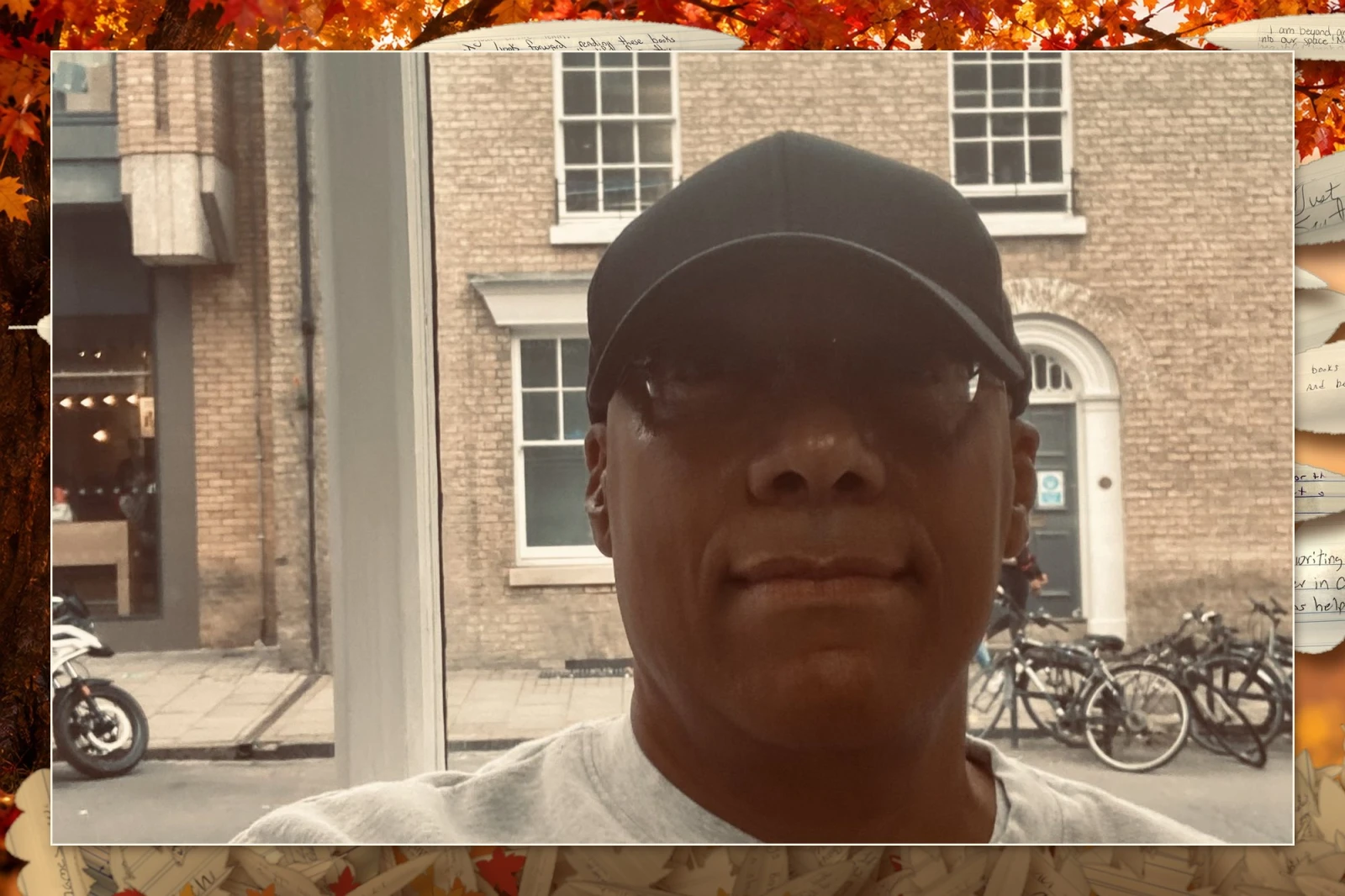
I have spent a good deal of time thinking about the distance between a prison cell and a life. Not the distance measured in miles, or the number of gates a man must pass through before somebody finally tells him he can go. I mean the distance inside a person. The miles of doubt, the accumulated years of being told who you are, what you have done, what you deserve. A prison can hold a man’s body, but its ambitions are larger. It would like to hold his imagination, too. Make him believe the walls are not merely around him but have somehow found their way inside.
I was fortunate. Fortunate is a complicated word when you have spent time in prison, but I use it deliberately. I got out. And I did not get out alone.
Reginald Dwayne Betts was a Yale law student when our paths crossed. He helped me find a way beyond the walls, beyond the life that had been prescribed for me. Some people enter your life and alter its direction without necessarily knowing the full measure of what they have done. Their intervention may look like one thing to them, a piece of work, an obligation, an act of conscience. To the person receiving it, it can be the difference between a future and no future.
I think about that often. What does a man owe another man who has helped him reclaim his life? There is no adequate arithmetic. Gratitude cannot be calculated, paid off, or put away like a debt. It becomes part of the way you walk through the world. It asks something of you. It asks that you not waste the possibility someone else helped make available.
Dwayne could have gone on with his studies, his ambitions, his life beyond the prison gates. Instead, he helped me imagine a life beyond mine as it then existed. That is no small gift. To be seen as more than the worst thing you have done, more than a prison number, more than the official record of your mistakes, is to be given back a portion of your humanity. Sometimes another person sees the possibility in you before you can see it yourself.
And then came Freedom Reads.
The organization Dwayne founded gave me something I could scarcely have anticipated: a job, a place to belong, and a chance to do work that means far more than a paycheck. There is a particular beauty in finding yourself on the other side of an experience that once seemed destined to define you, doing work that reaches back toward the very people still living inside it.
Freedom Reads brings books and libraries into prisons. But describing the work that way is like describing a tree by counting its branches. Books are the beginning, not the whole story. A library says that the mind still matters here. That curiosity has not been sentenced. That a person serving time remains a person capable of discovery, imagination, argument, beauty, and change.
I know something about the importance of that message. I know what it means to have the world narrow around you, to have possibility become an abstraction, something other people enjoy. And I know what it means when somebody refuses to accept that confinement is the final word on your life.
Now I have the privilege of running an organization built around that refusal. There is a circle here that I find hard to describe without sounding sentimental, though perhaps sentiment isn't always something to apologize for. A man helped me get out of prison. That man went on to build an organization dedicated to bringing the possibilities of books and imagination into prisons. And I was given a place in that work. My own journey became part of others' larger journey.
I do not mistake my good fortune for a universal story. I know men and women are still behind those walls, waiting, hoping, enduring. I cannot pretend that my freedom answers their questions or resolves the reason that brought them there. But I can bring something of what happened to me into the work. I can remember. I can bear witness. I can help make room for another person’s imagination to breathe.
If gratitude means anything, it must mean more than looking backward with a grateful heart. It must mean carrying the gift forward.
I am grateful to Dwayne Betts for helping me find the road out. I am grateful to Freedom Reads for giving me somewhere meaningful to go once I arrived. And I am grateful, perhaps most of all, for the chance to spend part of my freedom helping others discover that their lives, too, remain unfinished.
The prison gates opened once for me. I have no intention of forgetting what it felt like to walk free.
By David Perez Jr., Library Manager
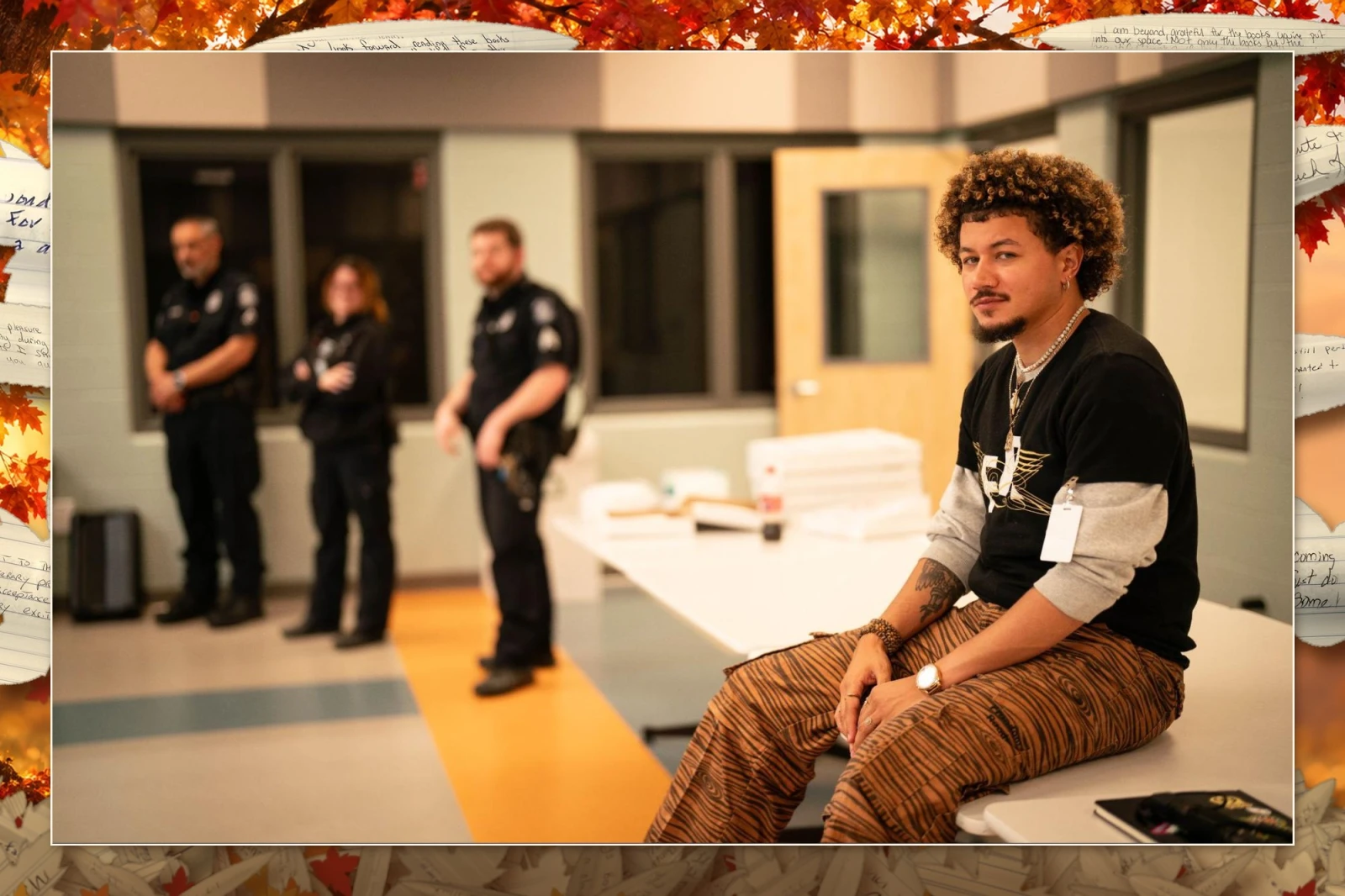
Maine, Maine Correctional Center
I am deeply grateful to literature for helping me understand myself and connect with others through their experiences.
I’m currently knee-deep in reading the official longlist for the 2027 Freedom Reads Book Prize, and I’ve loved The True True Story of Raja the Gullible (and His Mother) by Rabih Alameddine.
The book is too complex to describe in two sentences. But the protagonist, Raja, is recounting his memories of growing up in Beirut. Through those memories, as the best of us try to do with our own lives, he comes to grips with who he is and what he’s experienced in this world. Of course, his mother helps him. In the novel, mothers are fierce. And I believe that’s true in this life too. They are the pillars of the home, the very foundation of so many of us. But after trauma. We stray. After incarceration. We stray. From our mothers, too many of us who are fortunate enough to have them. We become outdoor cats, separated from our mothers long ago, roaming the streets in search of comfort, warmth, desire. At least that’s what Raja did, as struggling to come to grips with the trauma he’s experienced pushes him away from people he loved the most, like his mom. Imagine being single at sixty.
One passage in Alameddine’s book explains it all. Makes me think about my own sentencing in prison. Because I know my mom would have dug the prison out with a shovel to get me out. In The True True Story, after Raja is rescued from one of the wild tragedies of his life, his mother tells a nurse to tell him: “She said you’ll understand. She asked me to tell you she would break the world for you.” My heart broke open. I understood; it wasn’t even my mother saying it.
My mother is my warrior. Once, when some kids in the neighborhood jumped me, my mother came running barefoot, in her Sylvester and Tweety bird nightgown, which we call a ‘bata’ through projects, to my aid. Her black, disheveled bun bounced on her head like a royal crown as she ran and yoked one of the dudes who attacked me by the neck. I think about Raja and what he went through in the book. It’s hard to go through something and process what actually happened; it's one of the things the book made me see. It made me think about how I’ve experienced things that made me shut down and shut people out for many reasons. My mother will not be shut out. I am her baby, and she was around for all of it. She let me know that I didn’t have to bear it all alone. The childhood torment, the manipulation, the violations, the pain and suffering caused to me, caused by me. It is a lot, and she is there, consistent and compassionate.
Let me tell you what happened to Raja. He was kidnapped and spent the rest of his life thinking about that incarceration. Of his mom, he writes, “She was strong. I was weak. My incarceration had enfeebled me.” And then: “Before I could do anything, she had her arms around me, pulling me back to her bosom. ‘Get off me,’ I said, my first words. ‘No,’ she said.” I don’t know where I became scared of physical affection. Well, I do know. But I push away affection from the people I love, afraid of being hurt or taken advantage of.
Incarceration has stripped so much from me, from us - so much feeling, and every day I am trying to find my way back to myself. Sometimes that means trusting someone like your mother: lying in a dark room, on a soft bed, telling her in detail the awful things that have happened to you. Our mothers know more than we ever give them credit for. They are the fire when we’re searching for warmth. May I lean into that more.
Gratitude doesn’t wait for perfect conditions. I have learned I can be grateful even when my circumstances aren't what I would choose. I can be grateful for a book that cracked me open, for a mother who keeps asking to know the terrible things, and for the people around me who are carrying their own weight and still make room for mine.
But gratitude isn’t only something we give away. This month, I am also offering some to myself. I am thankful to the version of me who kept going at 10, 16, 21, 23, and now 30. He navigated as best he could, with the tools he was given. Some of those tools were sharp, and some were broken, but he made it here. Maybe you did too. You deserve that same grace.
So today, I am grateful to read. I am grateful for my mother, and for all mothers and maternal figures, the fierce warriors of their kin. And I am grateful for the person I am still becoming.
Now I want to hear from you. Tell me how your mother, or a maternal figure in your life, has shown up for you. Maybe it was one big moment, or a hundred small ones. What did they do? What do you carry from them today? And why are you grateful for them?
If thinking about your mother brings up more pain than comfort, that’s okay too. Write instead about anyone who cared for you: a grandmother, an aunt, a teacher, a friend, a cellmate, or even the part of yourself that learned to do the caring. Gratitude can go wherever love comes from.
By James Flynn, Library Production Associate
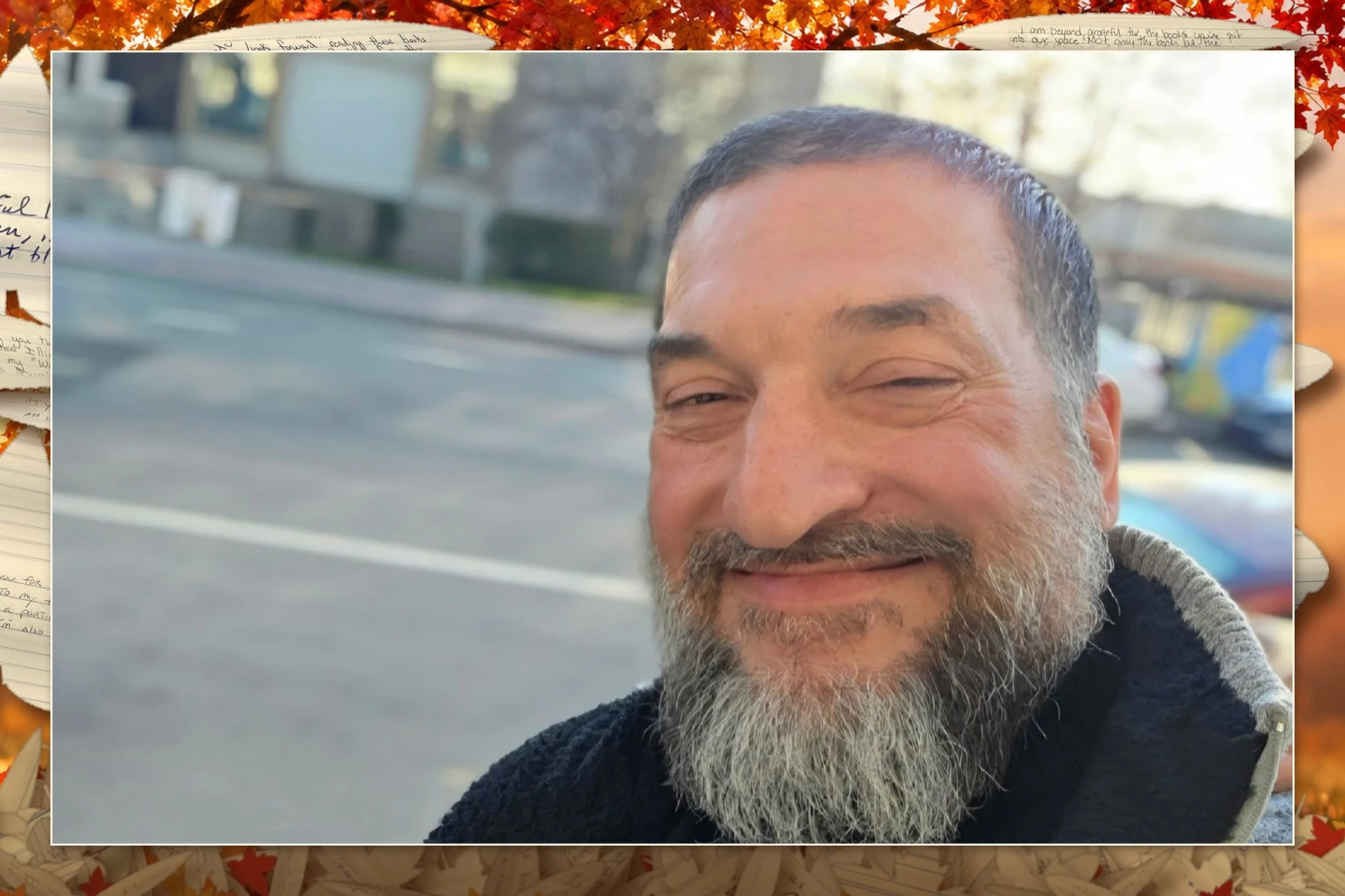
The fluorescent lights of the housing unit hummed, a familiar, sterile sound that had soundtracked thirty-two years of my life. But today, the sound was punctuated by the rhythmic thud of cardboard boxes hitting a rough, cold concrete floor.
My very first library opening with Freedom Reads was at the prison I had left in Connecticut not so long ago: MacDougall Correctional Facility. Walking back inside—this time into J Block—I met people I had just left behind. It was a weird feeling, but a deeply proud one. Tears were flowing, hugs were going around, and everyone was amazed, saying, "You did it." But I looked back at them and said, "No, we all did it because I needed everyone here around me to support me to get me where I'm at. I'm not going to forget where I came from, where I am, and where I want to go."
Freedom Reads began installing the Freedom Library, and it looked so beautiful inside MacDougall. I saw a man run his fingers over the spine of a brand-new paperback, his shoulders dropping just a fraction of an inch as he opened the cover, and I felt a heavy, beautiful wave of gratitude. I used to be on the other side of that look. Now, my job was to bring the outside world back to those still doing time, reminding them that their minds could never truly be walled in.
Fulfilling this mission is a daily reminder of how far I’ve come, and how much I owe to the circle that caught me when I finally stepped past the perimeter gate.
Stepping into the free world after more than three decades is an experience words barely reach. It wasn’t a seamless transition; it was a sensory and cultural shock. The society I left behind in the early nineties didn't match the hyper-connected, fast-paced world I emerged into. Suddenly, everything required an account, a password, a swipe, or a scan. Smartphones felt more like foreign countries than tools. And the sheer speed at which people moved and interacted was dizzying.
During those overwhelming first months at the halfway house on Howe Street in New Haven, Connecticut, my family and friends' steady, unwavering presence kept me anchored. They didn’t judge my confusion or rush my adjustment, and nobody embodied that patient support more than my wife, Anna Flynn. My wife stood by me as I learned to navigate the unfamiliar landscape of modern life, offering patience when the world's noise grew too loud. My wife’s strength has been a quiet force that shapes my days. To love someone who is relearning how to exist in freedom requires a profound, rare kind of understanding. Through the silent adjustments, the moments of confusion, and the steep learning curves of this new life. Her belief in me didn't just comfort me; it gave me a safe harbor to figure out who I am out here.
The foundation for this transition, however, began long before the gate opened. Inside, I learned that freedom isn't just a physical status; it’s a discipline. I spent years planning for success while locked up, realizing that re-entry begins on day one of a sentence, not the final day. I studied, I reflected, and I trained my mind to look forward. I learned to structure my thoughts, manage my reactions, and build a blueprint for the man I wanted to be.
Sometimes, the weight of the day-to-day can obscure the view. There are moments when things feel bleak, when the administrative hurdles of building a life, the lingering shadows of the past, or the simple friction of a changing society make the road ahead look steep. But even when I don't fully grasp how blessed I am, gratitude remains my baseline. It is a choice that dictates how I carry myself, how I speak to a stranger on the street, and how I show up for the men still behind the walls.
Now, every ounce of my effort goes into a deeper challenge: I’m trying with all my heart not only to have gratitude, but to actively show gratitude in everything I do. Along this road, I have listened closely to the world around me, integrating, adopting, and borrowing certain phrases and words that people out here use to navigate life. When hurdles come up, I remind myself that it is what it is, accept the reality, and move past it. I try to be mindful of each moment, anchoring myself in the present rather than the decades I left behind. I am learning to show grace to the people I meet, knowing everyone carries a hidden weight, and, just as importantly, I am learning to forgive myself for the missteps along the way. Because at the end of the day, true freedom isn't just about stepping past a gate—it’s about moving forward with a peaceful heart, staying mindful of the blessings around me, and making sure the world feels the appreciation I carry inside.
By Michael Byrd, Library Production Associate
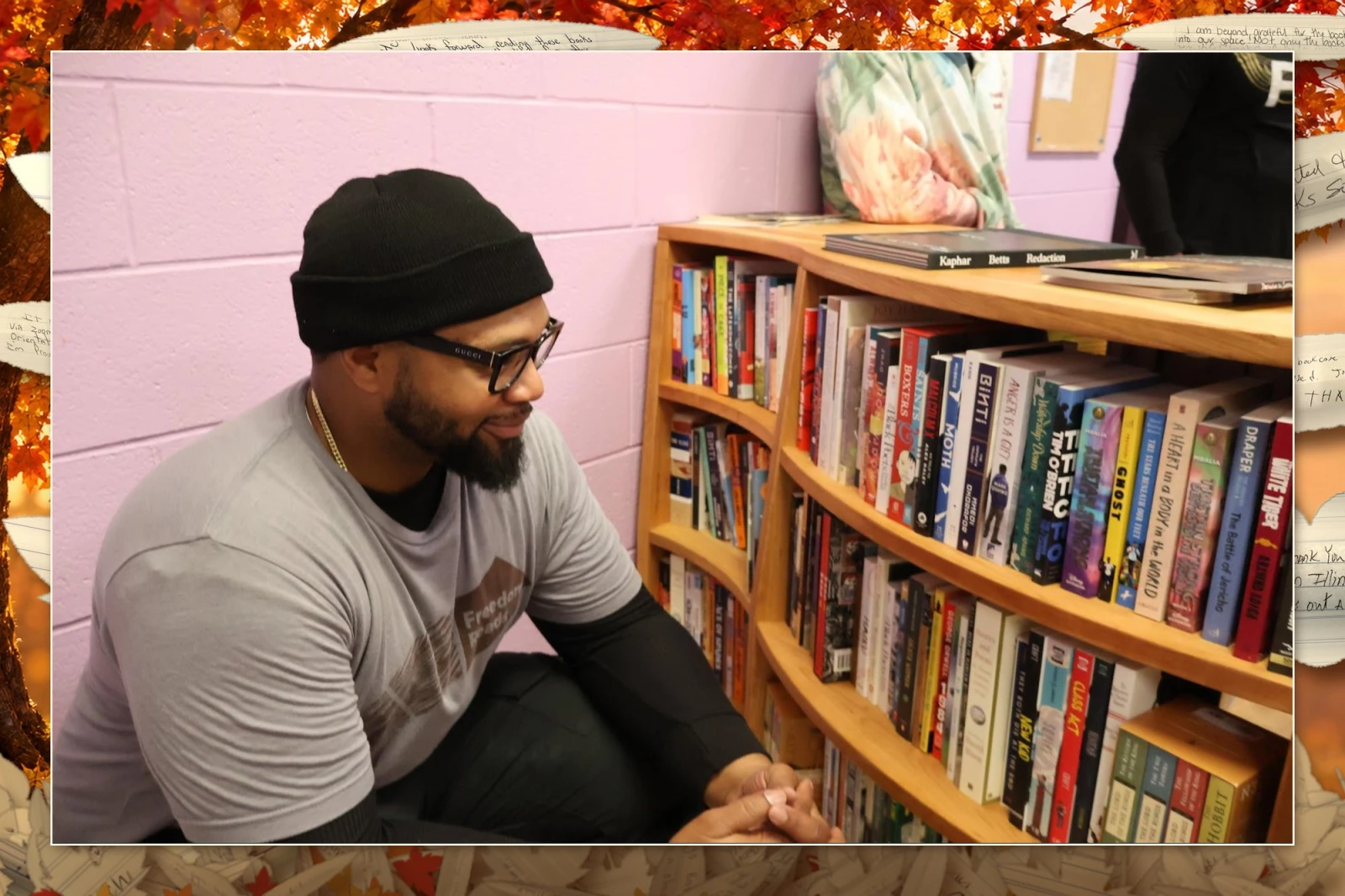
I came home in 2023, and I still catch myself stopping to say thank you. Not to anyone in particular, just out loud, for the small stuff. A quiet morning. A door I can walk through whenever I want.
Since then, so much has happened that I'm still taking it in. I became a father. The first time my daughter said "dada," I had to stop what I was doing. Two syllables, and I felt everything I'd missed and everything I get to keep. She has no idea how much she changed me, but I'm grateful for her every day.
And this year I married Lillian. She chose me, knowing where I'd been, and I don't take that lightly. I'm still learning how to deserve that kind of love, and I'm grateful she's patient with me while I do.
I've seen parts of the world I never thought I would. I finally made it to Puerto Rico, a place I'd dreamed about for years. Standing there, I thought about how big the world is compared to the walls I used to live behind. I'm still a little amazed I got to experience it.
And I get to do work that matters. At Freedom Reads, I help build libraries for people who are where I used to be, and I get to go back inside to help make it happen. That never gets old. It humbles me every time.
My life is better now than before I went in. I'll say that plainly, because I know I didn't do it alone. My family, my friends, the people at work who believed in me before I'd proven anything. Somebody showed up for me every step of the way.
So this season, I'm saying thank you. To my daughter, my wife, this team, and everyone who gave me a chance. I'm making it count.
Thank you.
By Craig L. Gore, Communications Associate
One of the best things I love to share when we go inside a prison to install a library is that Freedom Reads is not a state-funded or state-run organization. I make it a point to let them know that the Freedom Libraries are hand-crafted by people who once were where they are, and that hundreds of brand-new books and all the work we do are made possible by people who share our belief in that people have value and in the transformative power of literature. Once they hear that, they immediately become collaborators and part of our community.
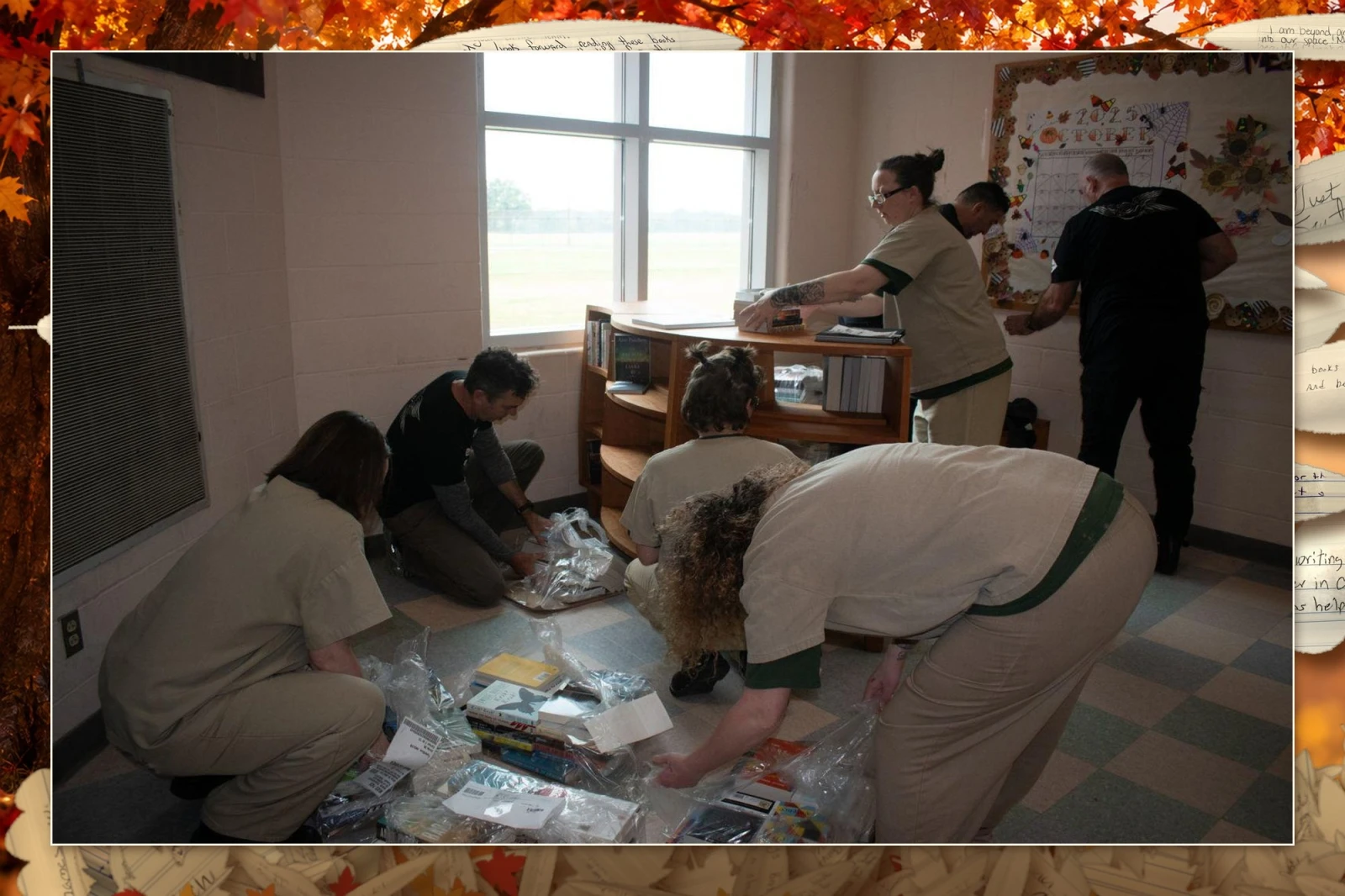
Missouri, Women's Eastern Reception, Diagnostic and Correctional Center (WERDCC)
Our library patrons often tell us, “Thank you, we got it from here!” We love it! After all, it is their library to organize as they choose.
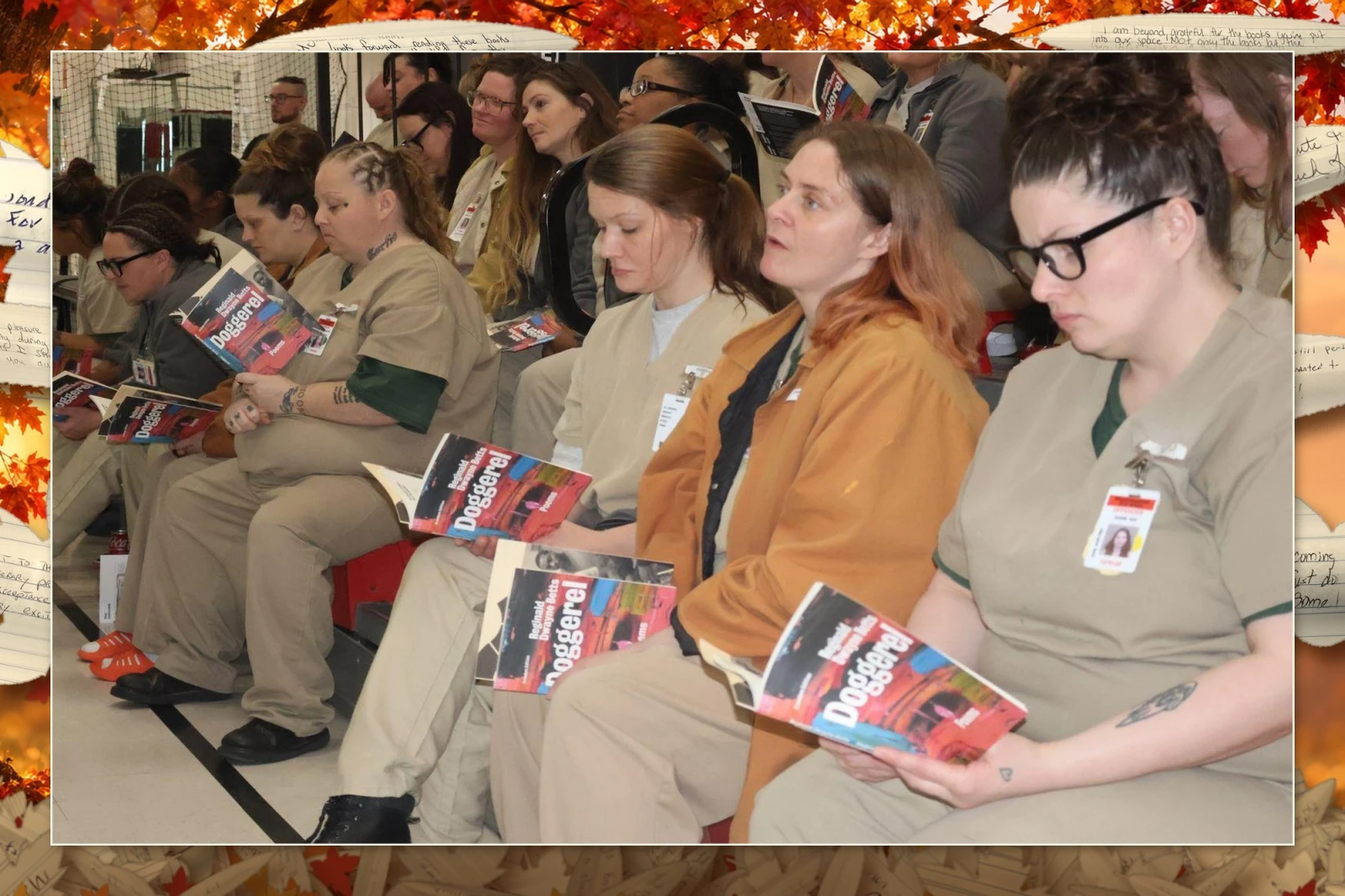
Missouri, WERDCC
One of the most engaging, impactful literary events. The women cried, laughed, and shared their stories as they related to and appreciated Dwayne’s reading of Doggerel in the prison gymnasium.
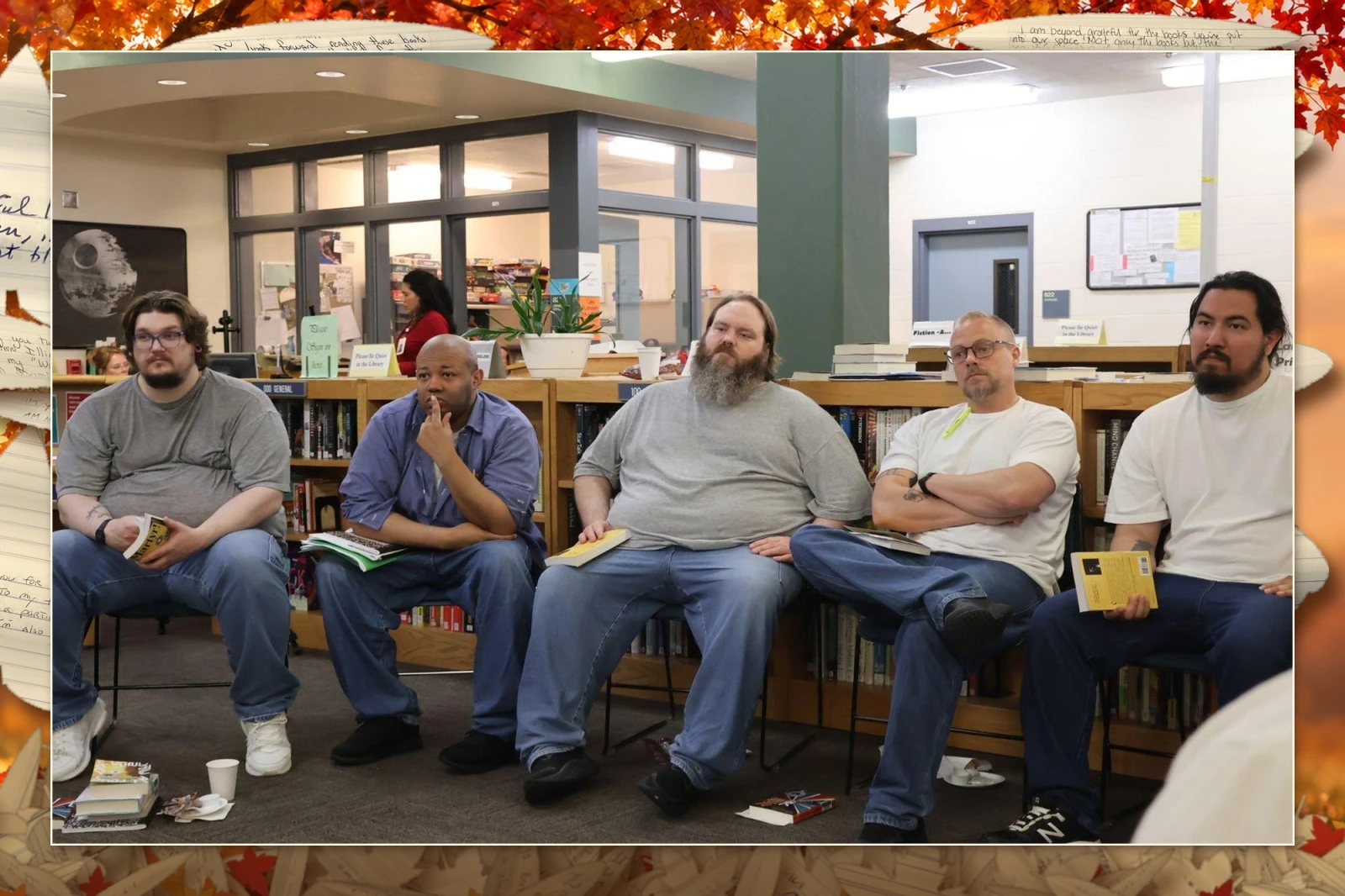
Minnesota, MCF Rush City
Martyr caused us all to look closely at life, suffering, joy, grief, and death. These thoughtful expressions reflect the powerful conversations about what it all really means.
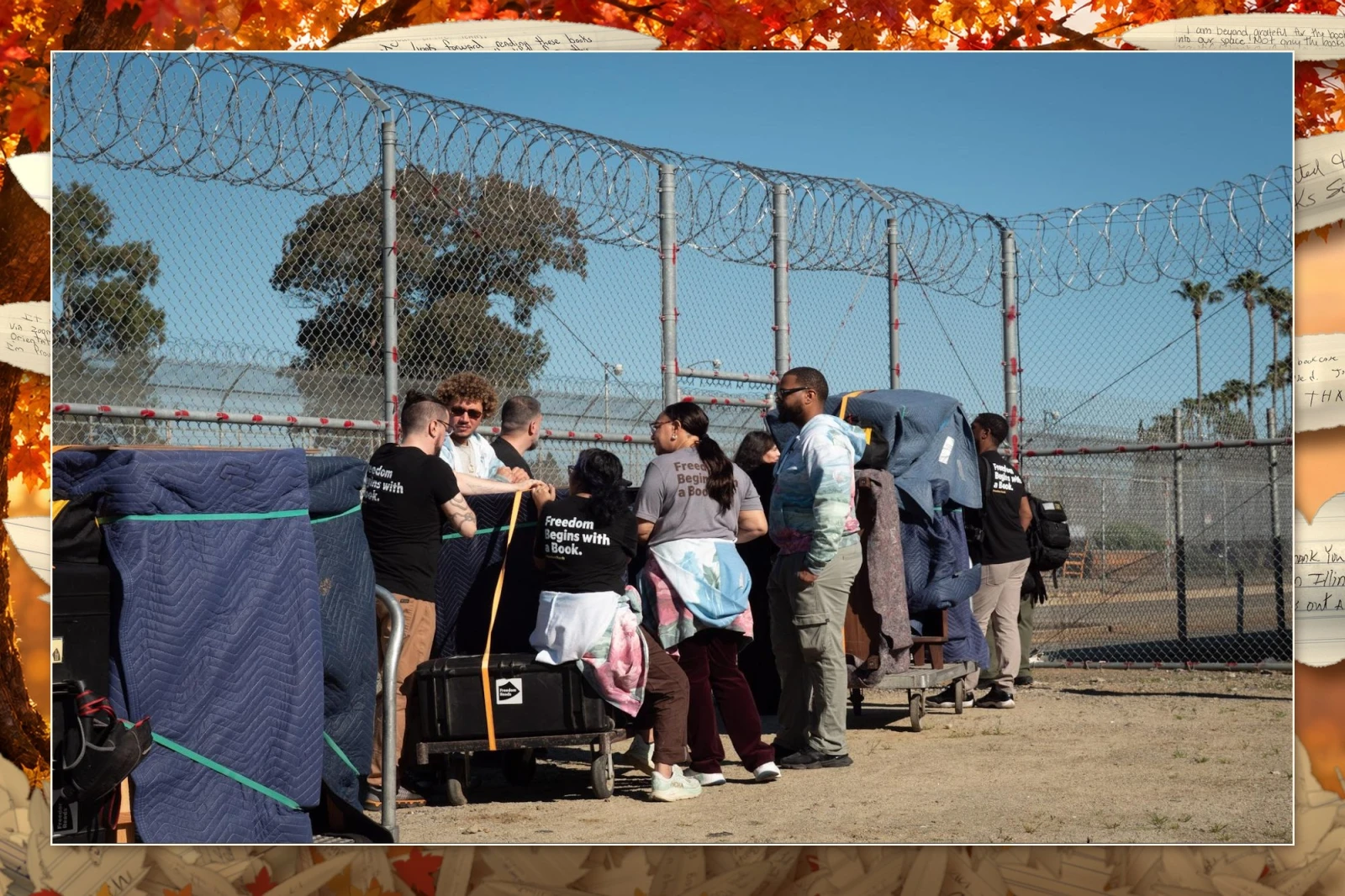
California, California Medical Facility
Even when the gates are locked, and the waits are long, we hold the line and do the work because it's all about the people we serve.
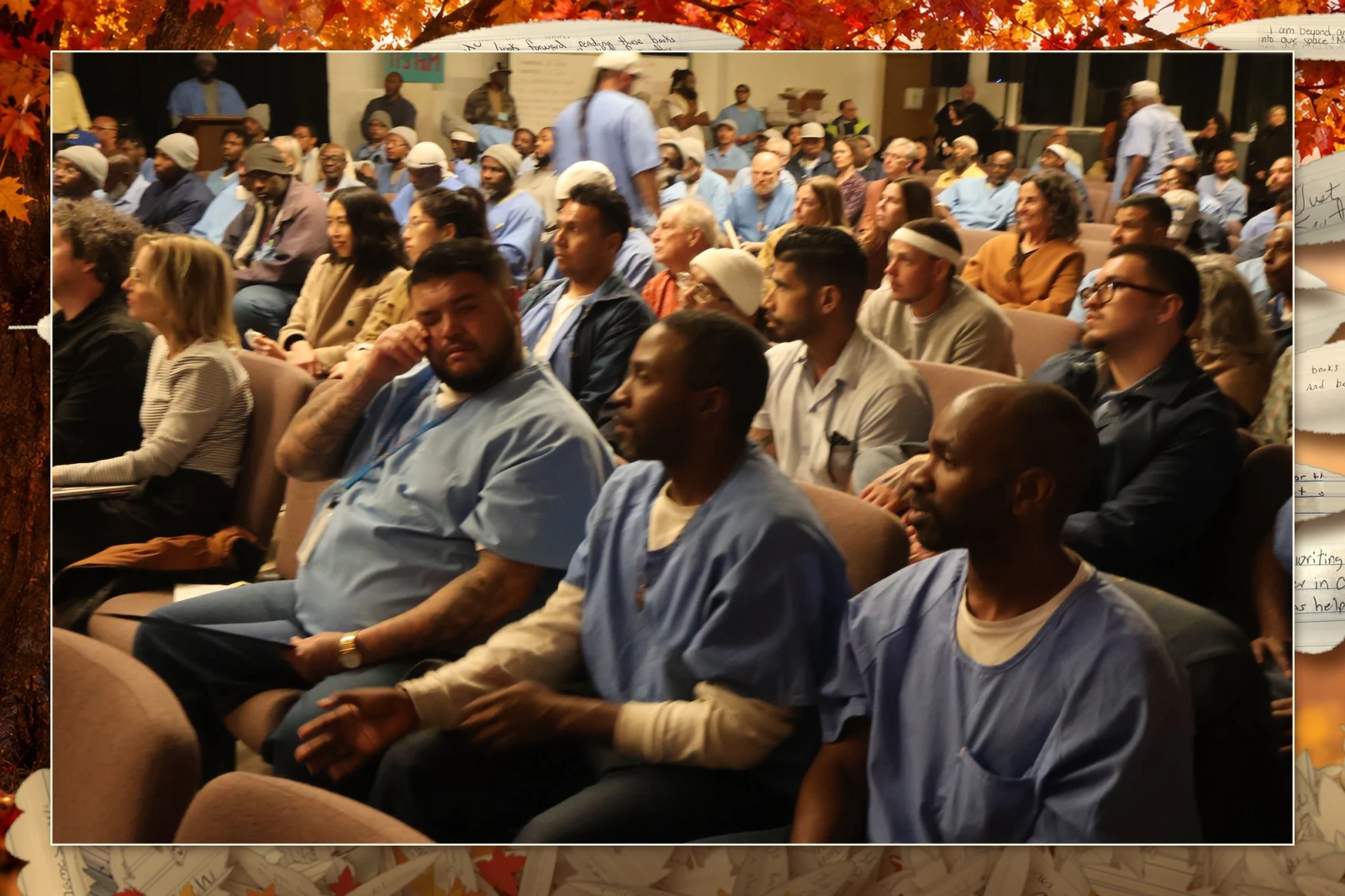
California, San Quentin
The men of San Quentin knew Dwayne and the work of Freedom Reads. They came with high expectations and deep gratitude, and they came to see a show.
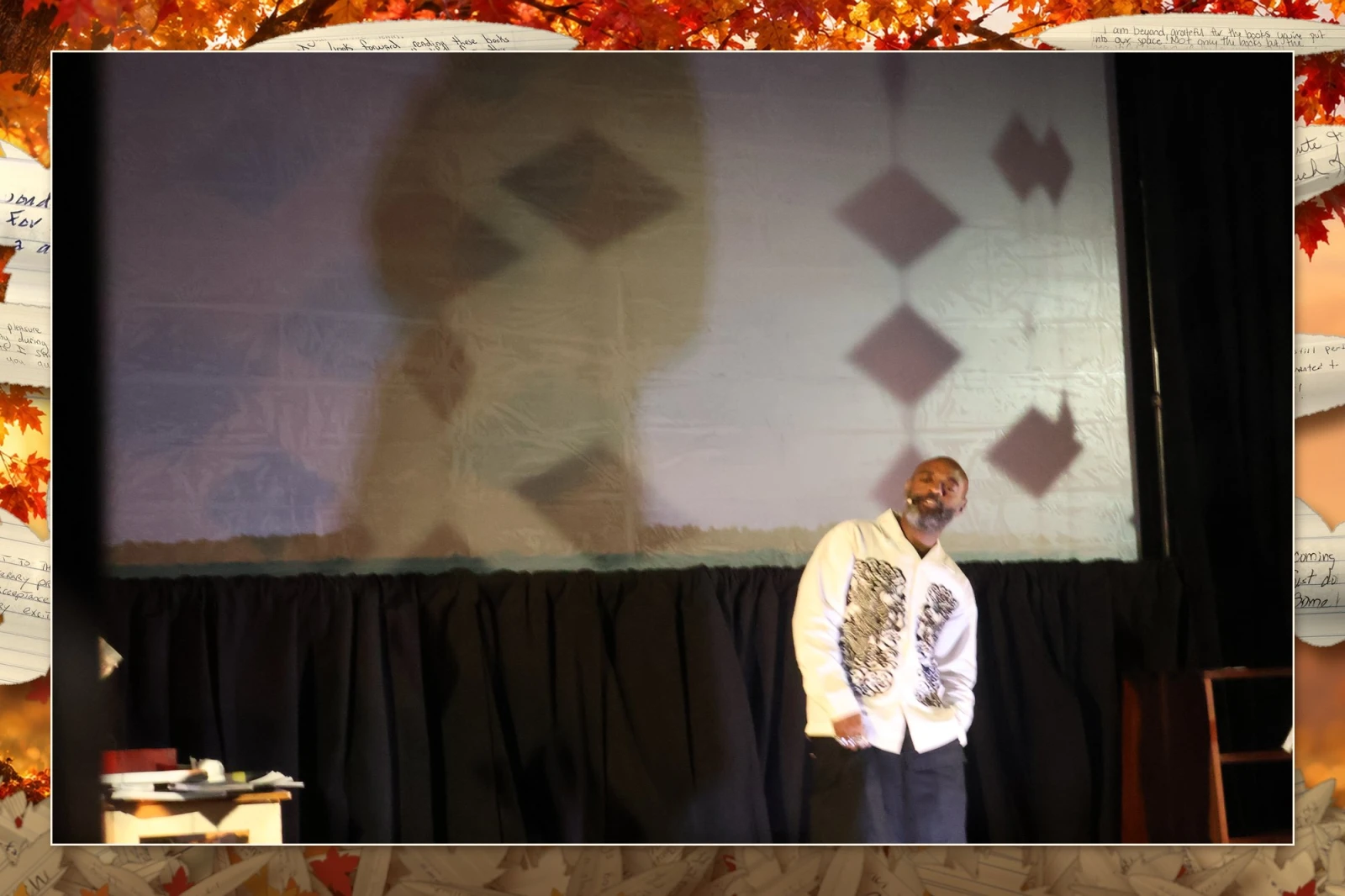
California, San Quentin
Dwayne did not let them down. It was an amazing night. The chapel of San Quentin was transformed into an off-Broadway theater by the Freedom Reads team and some amazing partners.
All of this is made possible by all of you, and we appreciate your continued support as we plant seeds of hope and possibility in prison cellblocks across the country, one Freedom Library and five hundred books at a time.