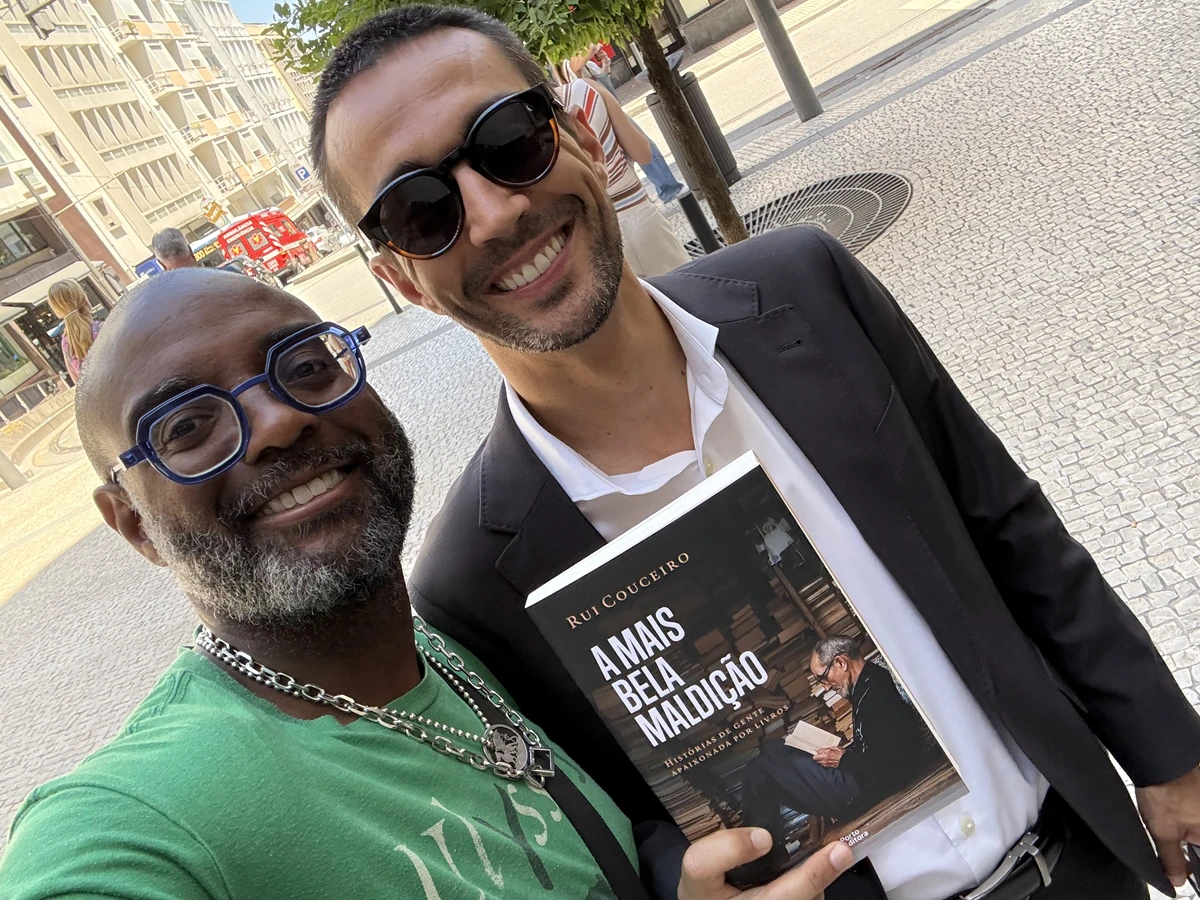
We landed in a beautiful city. But it was the wrong city. A dozen hours in the air, a butter-soft landing in Lisbon, and then I realized we needed to be in Porto, a three-hour drive away. By the time we’d gotten to Porto (my sons, my love, my guilt for adding hours onto a long trip), I’d half forgotten I was there for the Babell Festival, but would be reminded of the power of holding a book in your hands.
I read the Iliad in three days. The reading launched me into a fever dream, where instead of binge-watching Netflix, I lost myself in the familiar and unfamiliar world of Homer. I read while lying in bed, while riding in cars, while sitting in restaurants. Though there were parts of the story I knew, the Fagles translation was a wholly new landscape of sound and layering of ideas that I’d only glimpsed. The book-length poem that asks a reader to sit with an entire world on nearly every page teeming with the dead, the men they were on and off the battlefield, and the homes that war would prevent them from returning. The book became my companion. I didn’t read while sleeping but read while walking nearly 30,000 steps one Sunday afternoon. I read instead of eating, instead of sleeping. When Priam knelt beside the man who’d killed his son in combat, and kissed his hands, and begged for his departed son’s body, I wept.
By
Reginald Dwayne Betts, Founder & CEO, Freedom Reads
The thing about suffering is that when it’s over, you sometimes forget the depth of the cave you’re still emerging from. And by suffering, I mean depression. By depression, I mean 2024 when I found myself spiraling down a staircase that led me through all of Dante’s hells. A different way for me to admit this is to confess again: the best thing that you can do when hurting is find someone to talk to, but sometimes, the need to ask for help masks itself. You believe you’re asking for a life raft, but never articulate the word help. You emote. You weep. You learn what taciturn means. Around you, too often, people see your pain and it troubles them. They run to their comfort.
By
Reginald Dwayne Betts, Founder & CEO, Freedom Reads
I have been out of prison for just over two decades, and in that time I have gotten at least three honorary degrees. Not once have I had my sons or my mom or any of my closest friends come and listen to me address a class of graduates. Such a huge honor, one that I'm deeply grateful for, and one I realize now that I might not have believed I deserved. That's the strange thing about prison: it makes you question what you deserve. And yet there's also something profoundly beautiful about what men, women, and children create in prisons.
By
Reginald Dwayne Betts, Founder & CEO, Freedom Reads
Every year, I celebrate March 4th as if it's my birthday, because in some ways, it is my birthday. 21 years ago on March 4th, I walked out of prison for the first time, and walked back into the world as somebody who had earned a lot of new names. Felon, a name I earned when I carjacked a man. Convict, a name I earned over the eight and a half years I spent in prison. Ex-con, the name I earned by walking out of prison, a free man. Shahid, the name I chose because I’d begun to understand that a name can be a future and I wanted to carry one that reminded me that the lives around me mattered.
By
Reginald Dwayne Betts, Founder & CEO, Freedom Reads
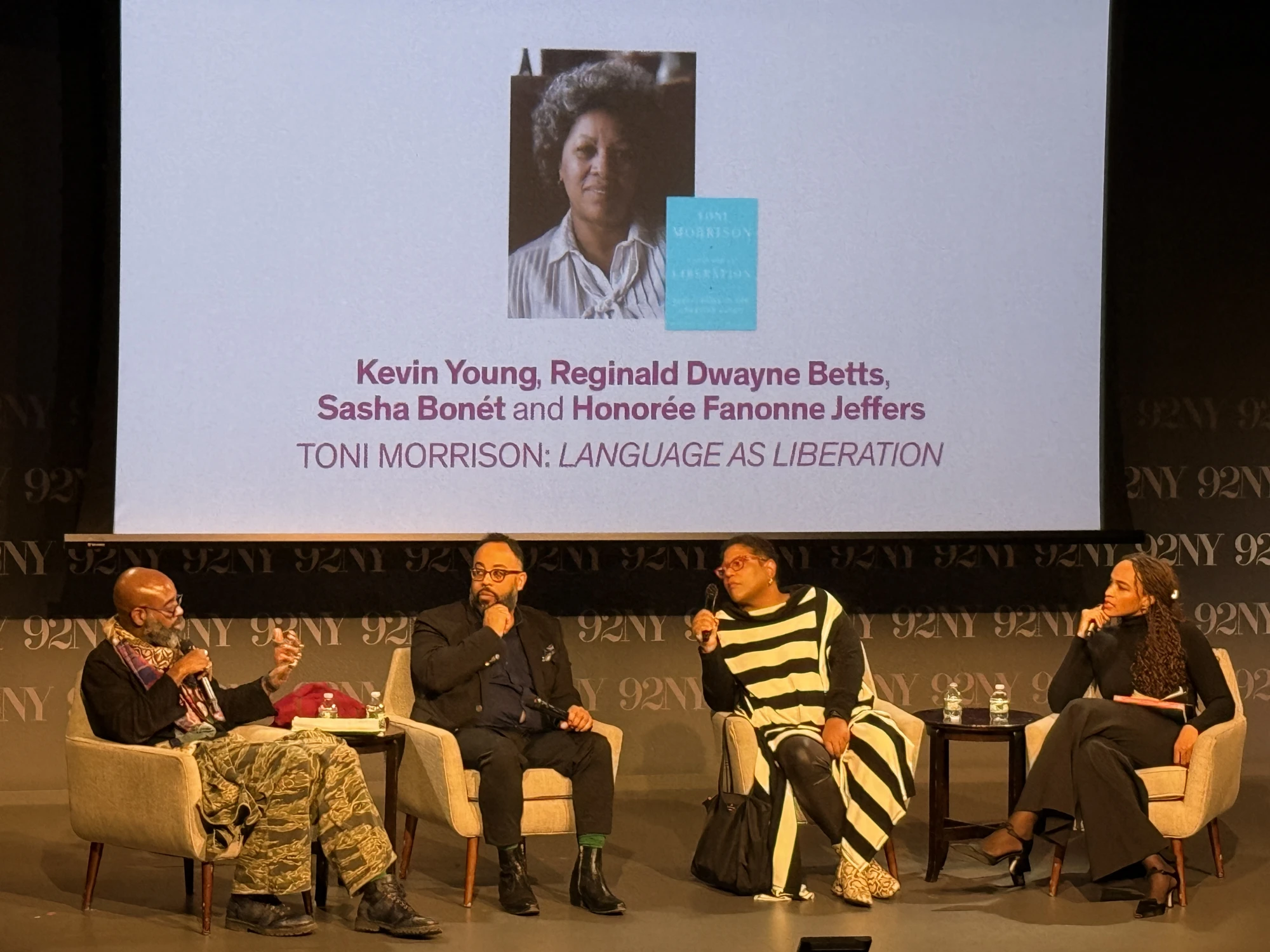
(Left to right) Reginald Dwayne Betts, Kevin Young, Honorée Fanonne Jeffers, and Sasha Bonét at the 92NY event The Novels of Toni Morrison and Language as Liberation in New York City on February 18, 2026
For years, I let the mistake on Wikipedia remain, the one that says my birthday is February 1st. I’ve grown obsessed with dates and remember reading The Big Sea and the Arnold Rampersand biography of Langston Hughes. Remember the ways that Black history month was both how I connected with history and how I connected myself to history. And I enjoyed the moments I shared with Hughes. Maybe I’ve just wanted to be like my mother, who wrote the first poem I ever read. Her birthday is on February 18th, which is the same day as Toni Morrison’s birthday. And when I learned Toni Morrison’s birthday, while in prison, one of the things that I thought deeply about was the ways in which it is easy to forget that Black history is what happens in your home. And that this, too, is American history.
By
Reginald Dwayne Betts, Founder & CEO, Freedom Reads
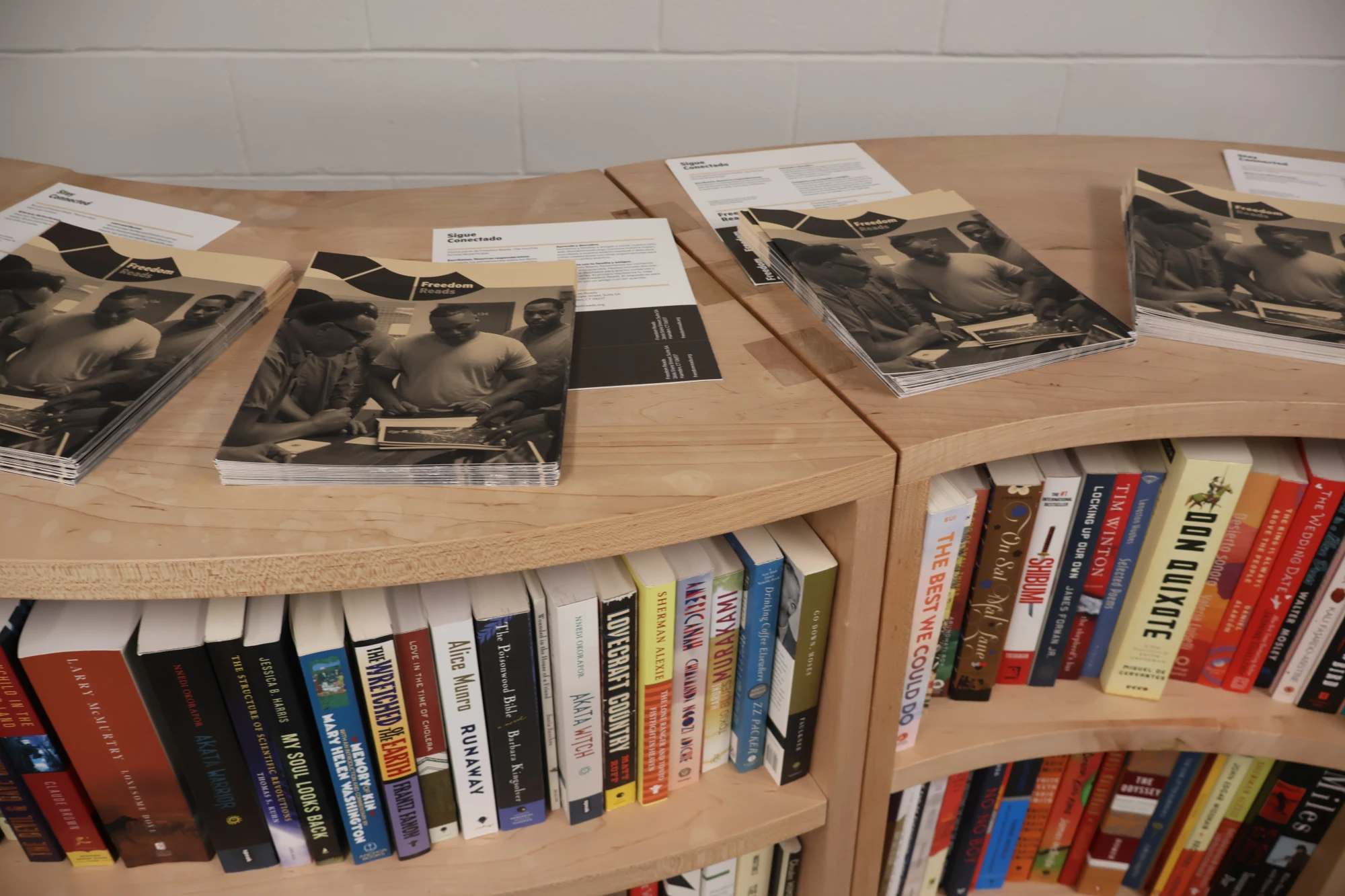
Freedom Library at Rikers Island, New York
I’ve always struggled with the beginnings of things, for me it makes the most sense to meander my way into things. In a way, I meandered my way into prison. I took the crash course: petty crime to carjacking before the midterms of my junior year. I get locked up in December and I might as well have gotten locked up in January. End of the year, beginning of the year – you get to imagine where you’ve been and what you’ve become.
By
Reginald Dwayne Betts, Founder & CEO, Freedom Reads
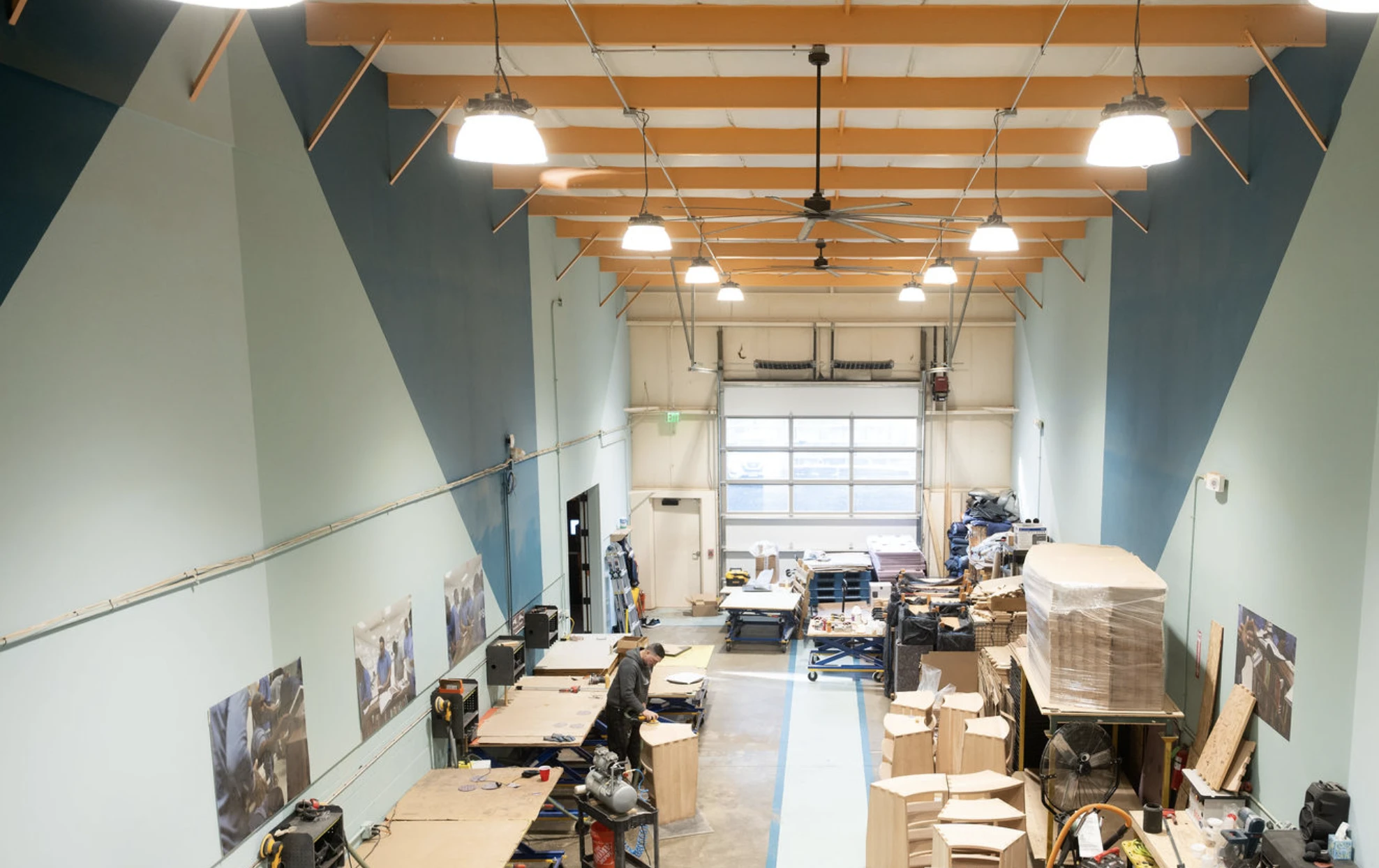
Freedom Reads library production site at the home office in Hamden, CT.(Photo: Justin Marantz)
This November, on his 50th birthday, J. Davis walked into a Maryland prison to open Freedom Libraries. He’d been out of prison fewer days than some of us have spent in the hole. But sometimes, to return is the ultimate act of care.
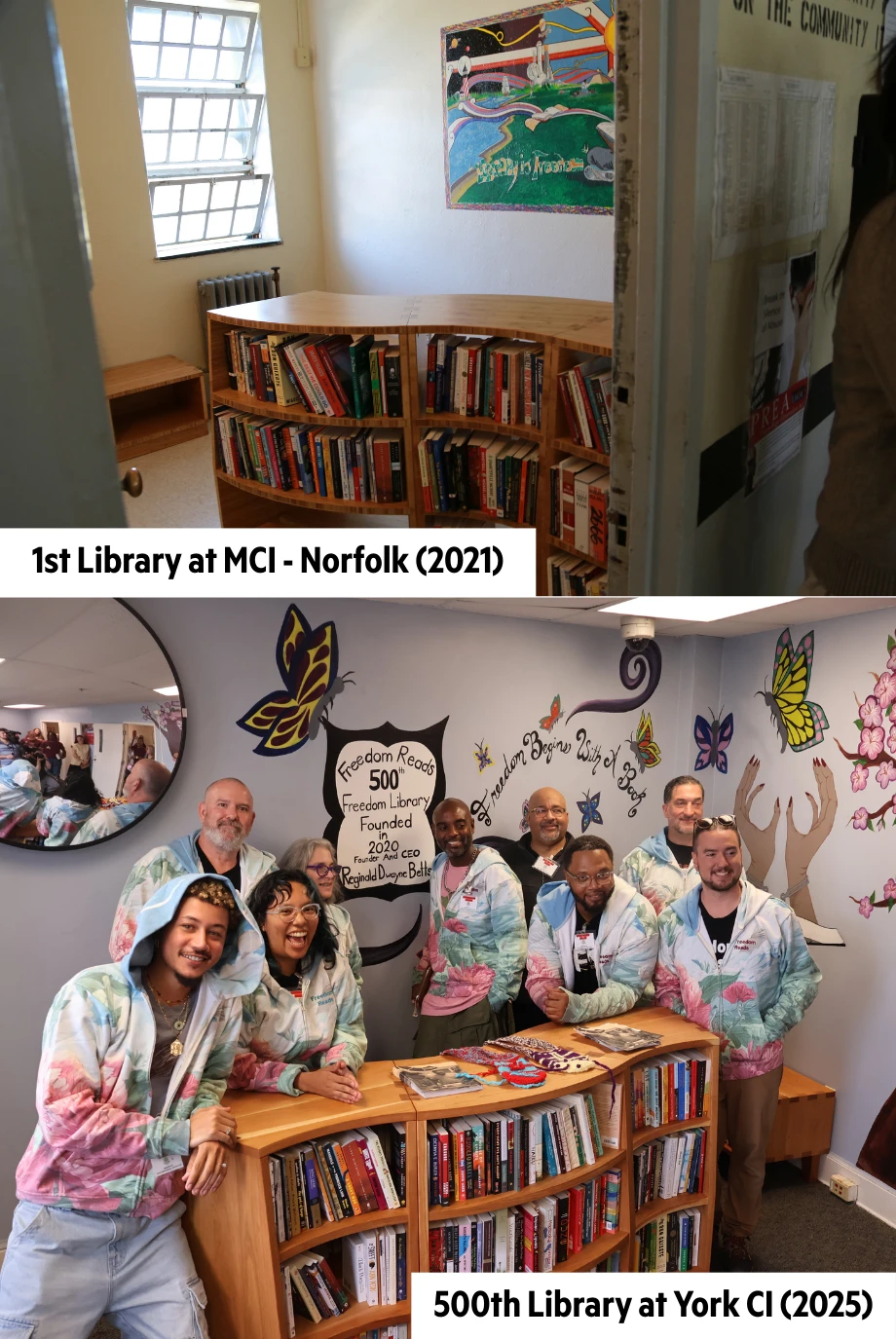
This year we opened nearly 200 Freedom Libraries across 17 prisons in 7 states. Since this journey began, we’ve now opened more than 600 handcrafted bookcases made of maple, walnut, oak, and cherry. That’s 300,000 brand-new paperbacks. And nearly every one of those libraries was built by the hands of Jimmy or Mike. We knew where they would land because Tyler and David made sure Departments of Corrections said yes, and Kevin made sure that when a prison said yes, libraries were waiting.
By
Reginald Dwayne Betts, Founder & CEO, Freedom Reads
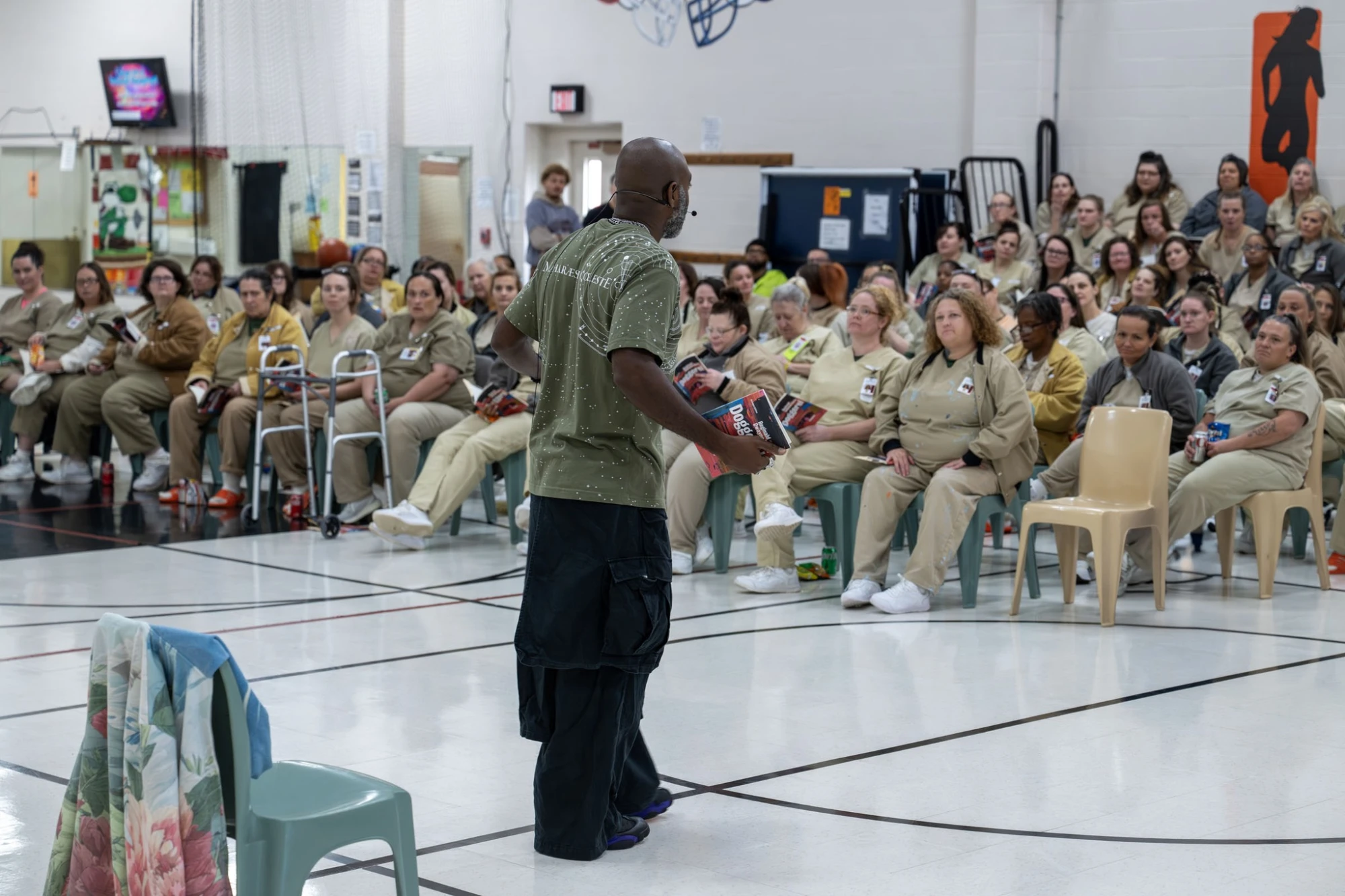
This month the team opened Libraries in Missouri and I read from Doggerel in the women’s prison. Our newest team member, James Davis III, took his first trip in 30 years, to return to a prison after being locked up in one for almost that long. I left Missouri so early in the morning that even the earliest dragon birds were still asleep. The night was still run by raccoons and opossums, the creatures that I've learned to love while riding on my 3am treks. I was at the airport, and it felt like I had walked into a scene from Percy Jackson, because everything was open. Starbucks was open, another coffee shop was open, and a bar was open. That's where I had breakfast. I walked to the bar starving in a way that only a man who has just left a prison knows and I wanted potatoes. “These mornings are familiar,” I say to no one, thinking of all my recent mornings in airports. “I once had a rule, I only drink when I’m awake,” the person beside me said. When I mentioned my poem, Whiskey for Breakfast, the bartender, this dark-haired woman, who stared just about as far as my mom, said, “Now you must read for your breakfast.” She didn't expect me to, but I sang: my liver, awash in all but the dregs of a charred out cask….
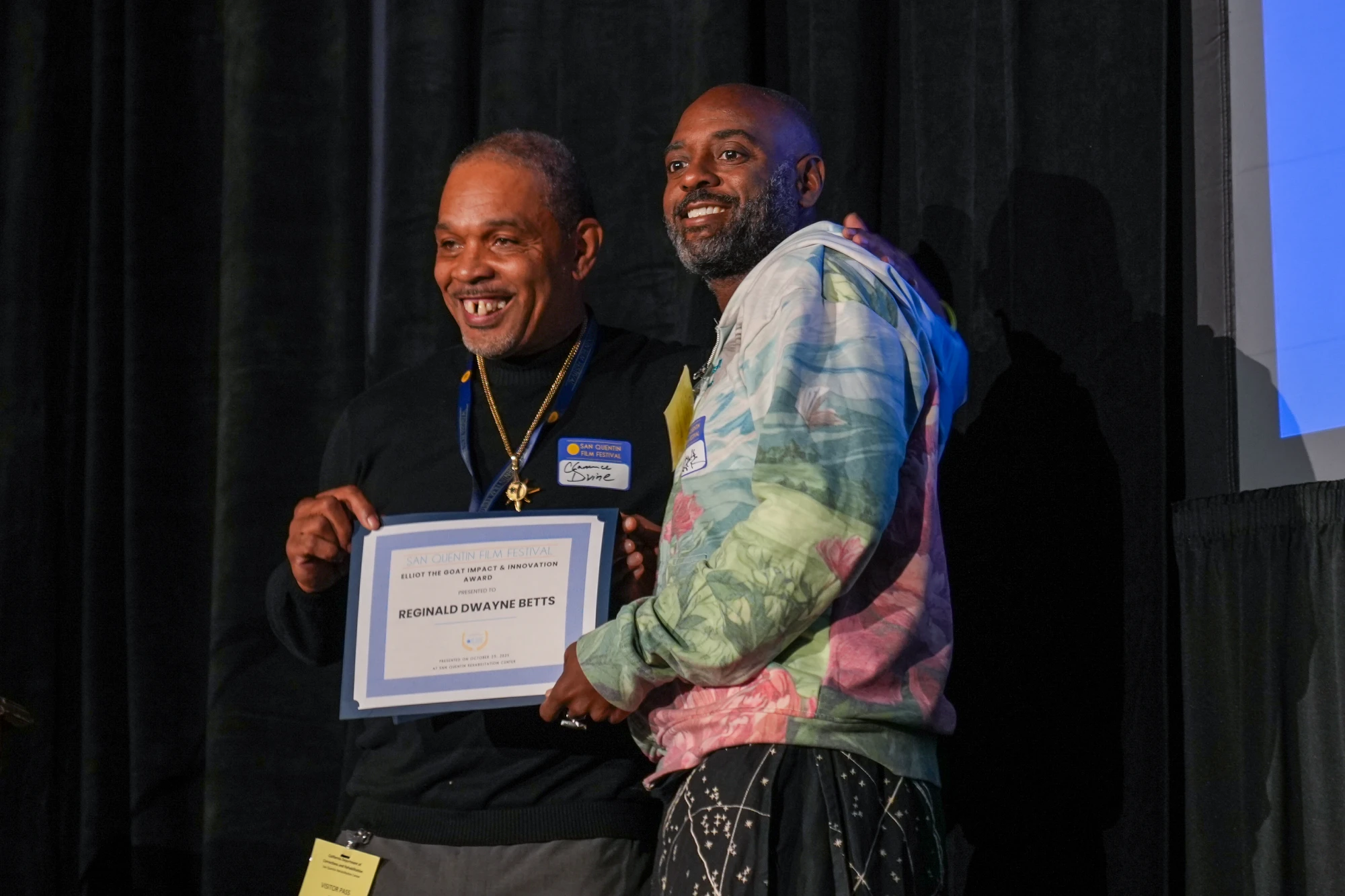
Freedom Reads Founder & CEO, Reginald Dwayne Betts receiving the Elliot the G.O.A.T Award at the San Quentin Film Festival. (Source: CDCR OPEC)
On October 20, 2025, I was at San Quentin Rehabilitation Center in California. Just outside the prison, you can look out and see one of the most beautiful views in the world. Staring out on the bay, near the horizon, the fog slowly lifts and you would be surprised that a prison is within walking distance. Dozens and dozens of us showed up to the second annual San Quentin Film Festival, brought to us by Rahsaan “New York” Thomas, who's spent more than two decades of his life at San Quentin, and his cousin Cori Thomas—who is not really his cousin but is his cousin in the way that prison teaches you the profound ways that we choose our families.
Far too many stories I tell about someone else end up becoming stories I tell about someone allowing me to see myself truer. It’s the tragedy of going to prison as a sixteen-year-old, long before I’d had the experiences or sense of knowing who I was. And still, some of the stories become the best ways to remember the people. When I met Aggie Gund, I was running late. I’d been invited by Elizabeth Alexander to meet with Aggie and a group of others about the beginning of Art for Justice.
By
Reginald Dwayne Betts, Founder & CEO, Freedom Reads
During the fall of 2021, I drove down a stretch of highway headed towards MCI-Norfolk, a prison in Massachusetts made famous in part by the years that Malcolm X and other prisoners incarcerated there did their thing on a debate team that battled the likes of Harvard and other elite institutions. I was headed there with my Freedom Reads’ team to open our first Freedom Library. It’s a wondrous thing to do something for the first time, and on that morning, having ridden for two hours in the passenger seat, an open laptop as I wrote about the late Michael K Williams, I struggled with the juxtaposition I’ve lived with since handcuffs first graced my wrists: the possibility and potential of Black men and all the public ways we often die too soon. Williams once told me that his dream was to build a center where young folks who were like he once was, desiring more than the violence and poverty around them, could actively envision better tomorrows and learn dance and acting and what it means to be safe. That is part of my dream for the Freedom Library.